
 (416) 250-6856
 contact@drywalltoronto.ca
 Mon-Fri: 8AM - 4PM

Board and Batten Wall – What It Is, How It’s Built & Cost Considerations
We build a lot of feature walls. Some are structural. Some are decorative. A board and batten wall sits firmly in the second category – but it still needs to be built correctly or it shows every shortcut. At Express Drywall Services, we install board and batten as a wall treatment that looks clean years later, not just good on install day. The difference is usually hidden in the prep, not the paint. That’s where most problems start. And that’s also where most DIY tutorials stay vague.
This guide explains what board and batten actually is, how it’s built on drywall, where DIY works, where it breaks down and what costs to expect when it’s done properly. We’re focusing on real walls, not showroom mockups. Every example here comes from jobs we’ve either installed or fixed. That context matters when you’re deciding how far to take this project.
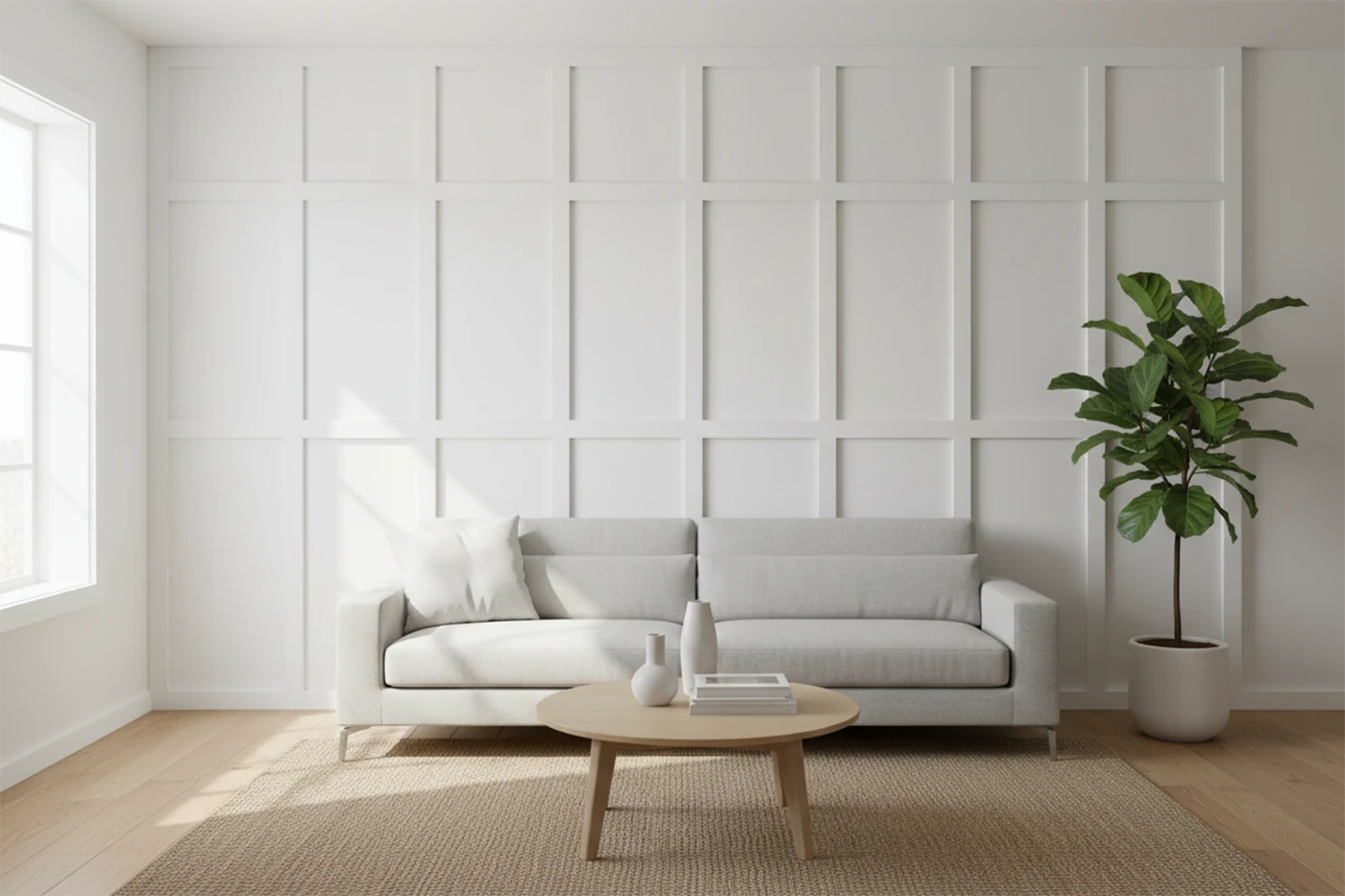
Board and Batten – What This Wall Treatment Really Is
Board and batten is a classic wall treatment made from a series of vertical boards with narrower batten strips covering the seams. Historically it protected exterior walls. Indoors, it’s now used as an accent wall or full feature wall. The purpose changed, but the visual language stayed the same. Vertical rhythm is the defining feature.
Modern board and batten is decorative, not structural. Everything is installed over drywall or a backer board. That’s important – because mistakes don’t hide. Uneven walls, bad cuts and rushed spacing will all show through paint. There’s no forgiveness layer.
When people say “board and batten,” they often mean very different layouts. Some designs are minimal. Others are dense. The spacing and proportions decide whether it looks intentional or improvised. This is where planning beats enthusiasm.
Board and Batten Wall vs Other Wall Decor
Compared to simple molding or panel board, a board and batten wall creates depth. Vertical boards visually raise the ceiling. Horizontal board placement can widen a room. Those optical effects are real and noticeable.
Unlike wallpaper or paint, this wall decor adds physical dimension, which is why board and batten finishes are often used as long-term accent wall solutions. That’s why texture matters so much here. A textured wall underneath will telegraph through thin materials if prep is skipped. Flat walls are not optional, which is why proper taping and mudding matters before any board and batten install. Once installed, board and batten becomes part of the architecture. It’s not something you casually change later. That permanence should influence your design choices early.
Batten Accent Wall vs Full-Room Install
A batten accent wall focuses attention on one surface – often behind a bed, sofa or dining table. A full board and batten installation wraps the room and requires tighter alignment around doors and windows. The jump in complexity is significant.
Accent wall installs are more forgiving. Full-room installs demand better layout discipline and cleaner transitions into baseboard and door trim. Small errors repeat across every wall. If you’re new to this style, starting with a single accent wall is usually smarter. It limits risk while still delivering impact.
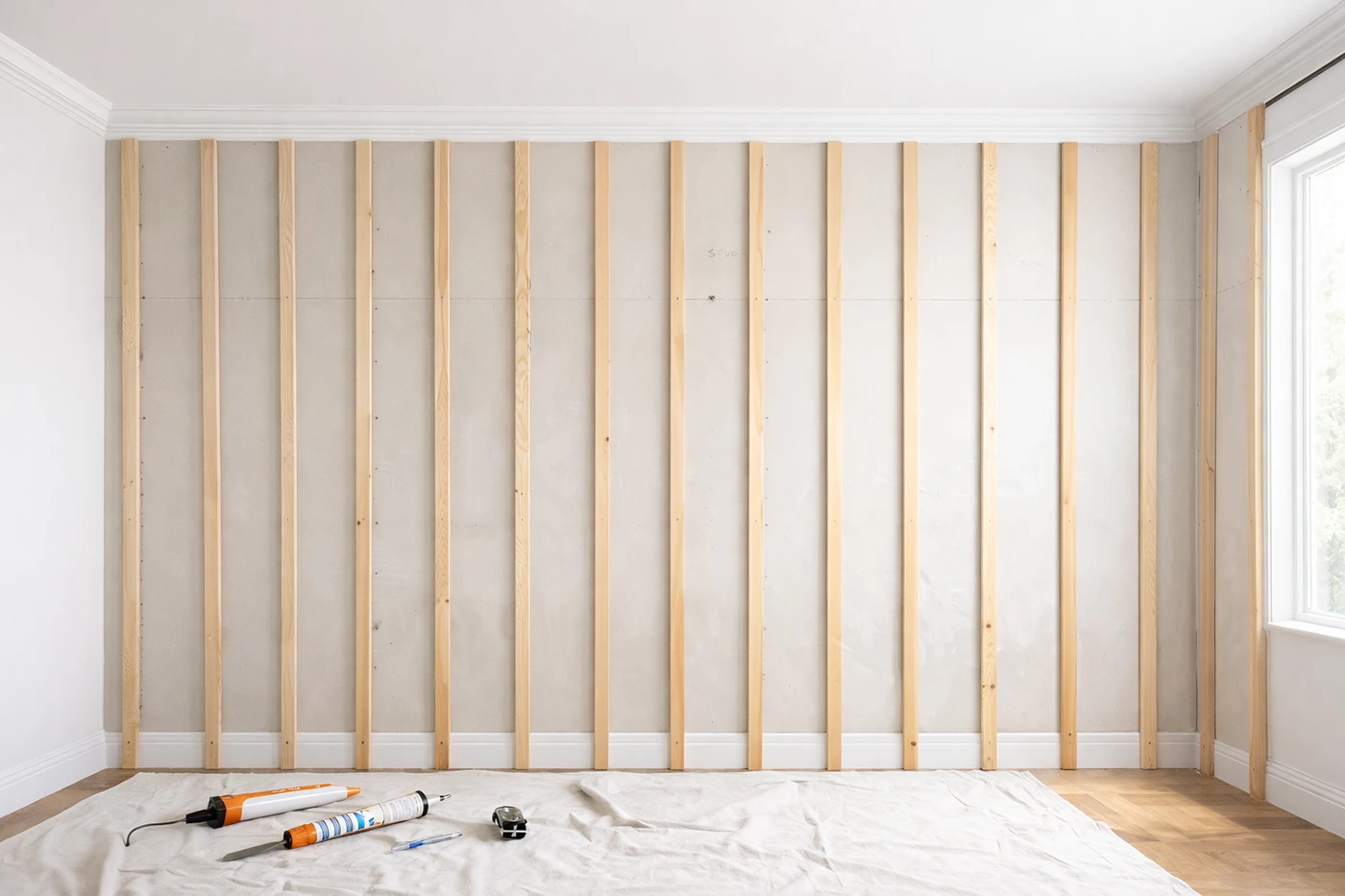
Board and Batten Wall Layout: Spacing, Height and Proportion
Spacing is where most DIY board and batten projects go wrong. Batten spacing that looks fine on paper can feel crowded or sparse on a real wall. Scale changes everything. We usually lay out spacing on the floor first. Measuring tape in hand. Chalk lines on drywall. This step saves hours later. It also exposes problems before boards are cut.
Spacing of the battens depends on wall width, ceiling height and whether the design includes a top ledge or full-height vertical boards. There’s no universal number that works everywhere.
Vertical Batten Boards and Spacing Rules
Vertical batten boards should align with wall studs where possible, which comes back to proper framing behind the drywall. That gives you solid fastening points and avoids relying only on construction adhesive. It also reduces long-term movement.
Batten spacing is rarely equal edge to edge. We center the pattern visually, not mathematically. That’s the difference between a custom look and a template look. Symmetry is about balance, not measurement. Ignoring stud locations usually creates more nail holes, more filler and weaker attachment. That trade-off isn’t worth it.
Top Horizontal Board and Top Ledge Decisions
Some designs stop at chair-rail height. Others run to the ceiling. A top horizontal board creates a finished edge and supports a top ledge. It also locks the layout visually. Ceiling-height board and batten exaggerates height but requires cleaner cuts and tighter miter joints. There’s nowhere to hide mistakes. Every joint is at eye level. Shorter installs are more forgiving, but they still require straight lines. Crooked tops ruin the entire wall.
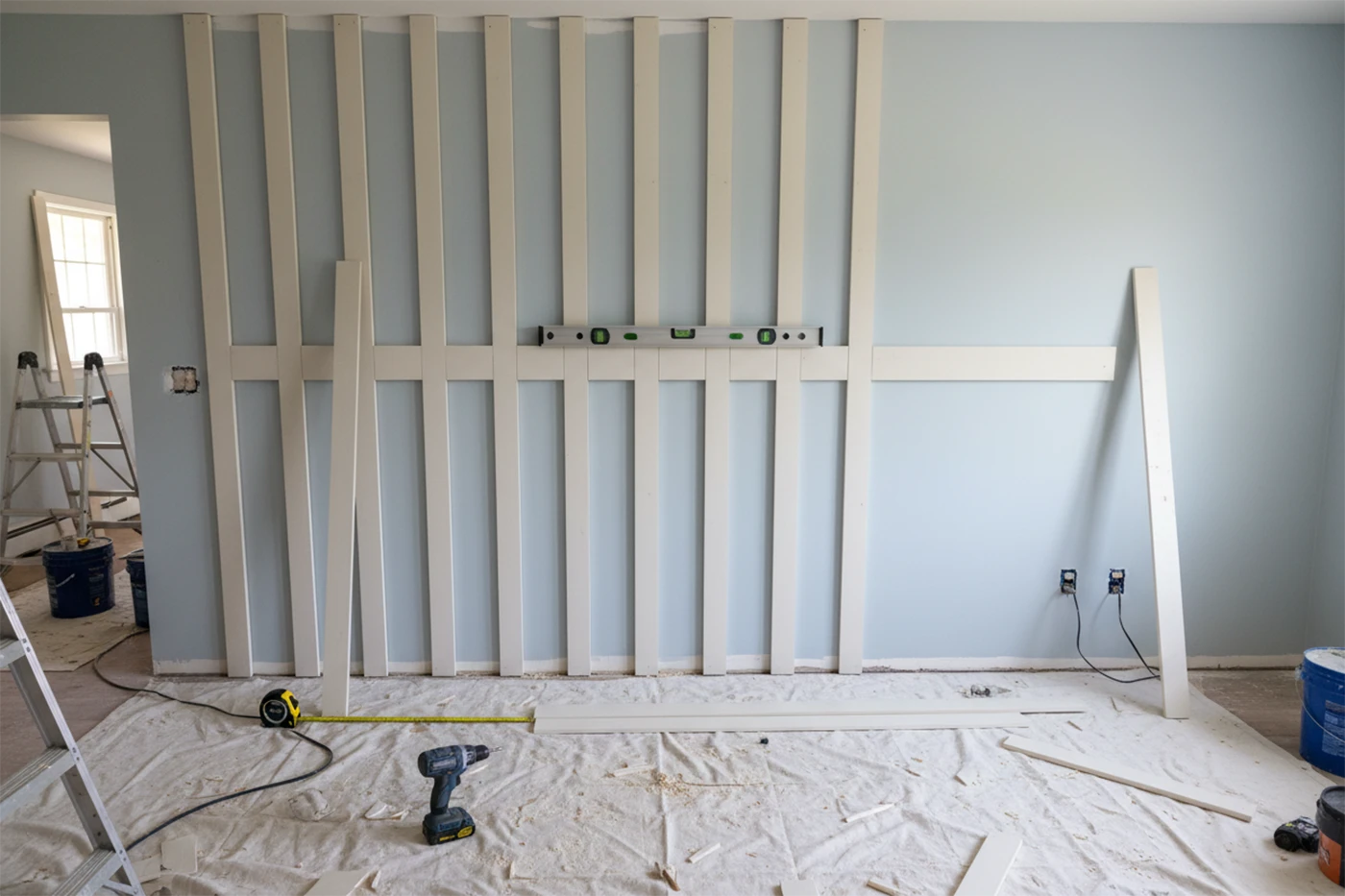
DIY Board and Batten Wall – Where It Works and Where It Fails
A DIY board and batten accent wall can work. But only under certain conditions. Flat drywall. Square walls. Patience. Without those, results vary.
Most failures we repair came from rushing, poor layout, or ignoring issues that later require drywall repair before the wall can be fixed properly. Or skipping layout. Or assuming caulk fixes everything. It doesn’t. Caulk hides seams, not bad geometry. DIY board and batten succeeds when expectations are realistic and tools are correct. It fails when speed replaces planning.
DIY Board and Batten Tools and Materials
At minimum you’ll need a miter saw, brad nailer, stud finder and measuring tape. Pre-primed board helps. MDF is common. Wood works too. Each choice affects finish quality. Liquid Nails or another construction adhesive is often used, but it shouldn’t replace fastening into studs entirely. Nail holes will need filling. Use wood filler. Sand carefully. Skipping sanding shows under paint. Always. Especially with semi-gloss finishes.
DIY Mistakes We See Most Often
Uneven spacing. Misaligned vertical boards. Gaps blamed on caulk. Over-reliance on caulk to fix crooked cuts. These mistakes compound fast. Caulk is for seams, not structure. Use caulk sparingly. Too much ruins crisp lines and kills texture. Clean edges matter more than speed. Most of these issues are preventable with slower layout and test fitting. That’s where DIY projects usually rush.
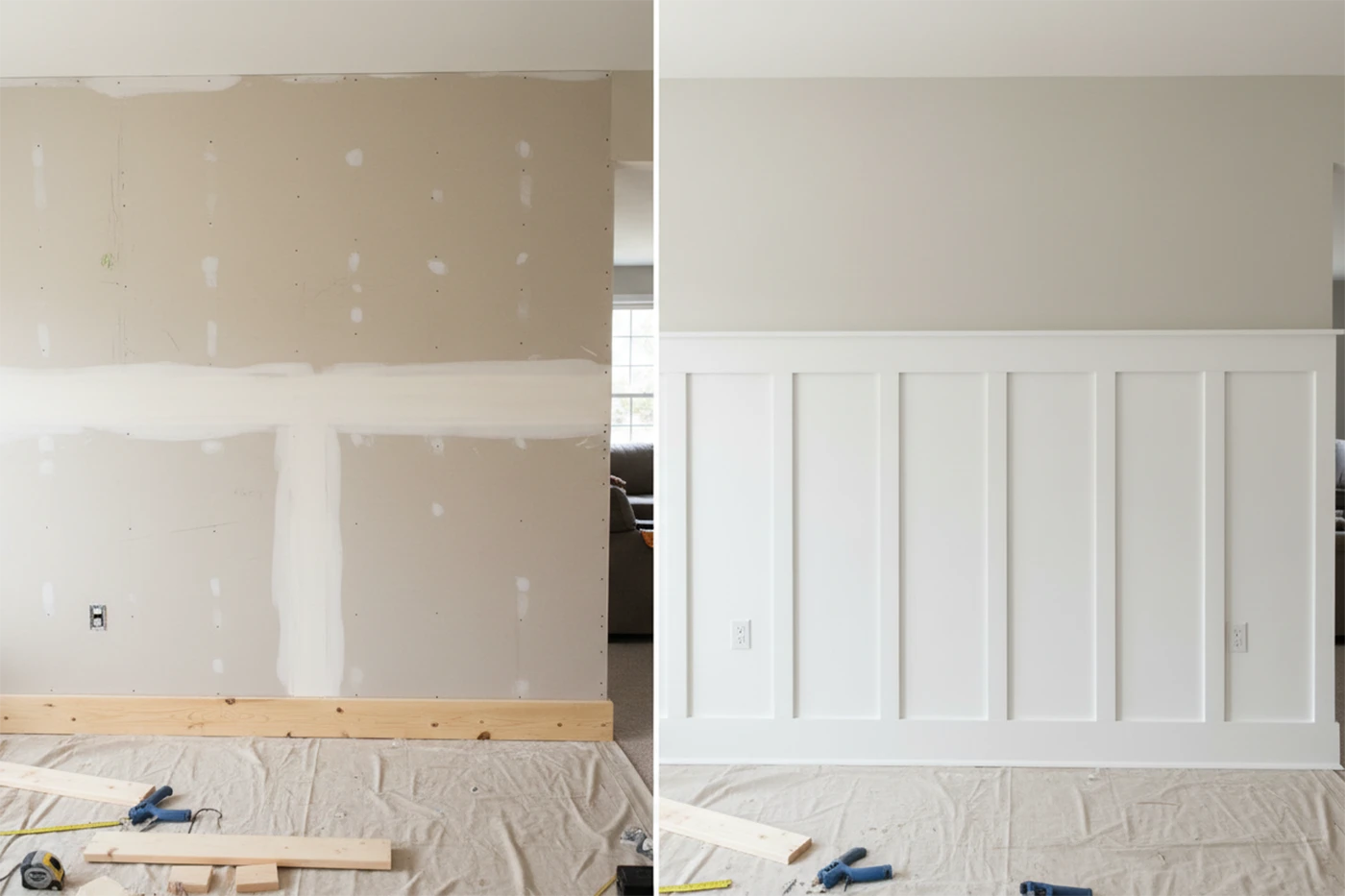
Install Board and Batten – The Contractor Process
When we install board and batten professionally, the process is controlled. Every step has a reason. Nothing is left to chance. We locate wall studs first. Stud spacing matters. That determines where vertical batten boards land and how secure the finished board feels. Fastening strategy starts here. Skipping this step usually leads to loose boards and visible movement over time. We plan attachment points before a single board is cut.
We install the board to the wall using fasteners and construction adhesive together – never one alone. This prevents movement and keeps seams tight long term. Adhesive controls vibration while fasteners provide mechanical strength. Relying on only one method almost always causes problems later.
Board and Batten Installation Step by Step
Drywall is inspected and flattened first. Existing baseboard is either removed or integrated cleanly. Backer board or panel board is installed if required. Prep is everything. Walls that aren’t flat will telegraph flaws through every batten. Fixing this early saves time later.
Vertical boards go on next. Then batten pieces. Then the top horizontal board. Nail holes are filled. Sanded. Refilled if needed. No shortcuts here. This stage determines how clean the final surface looks. Rushed filling always shows after paint. Only then do we move to painting the wood. Paint is the final step, not the fix. It enhances good work but never hides bad prep. That order matters more than most people expect.
Pro Tip for Clean Finishes
Prime before install when possible. Touch up after. This reduces visible seams after seasonal movement. It also improves adhesion. Pre-priming seals edges that are hard to coat later. And one more pro tip – never rush drying time between coats. That’s where most “finished” boards fail months later. Patience pays off here. Paint cures slower than most people expect. Plan for it. Dry-to-touch and fully cured are not the same thing.
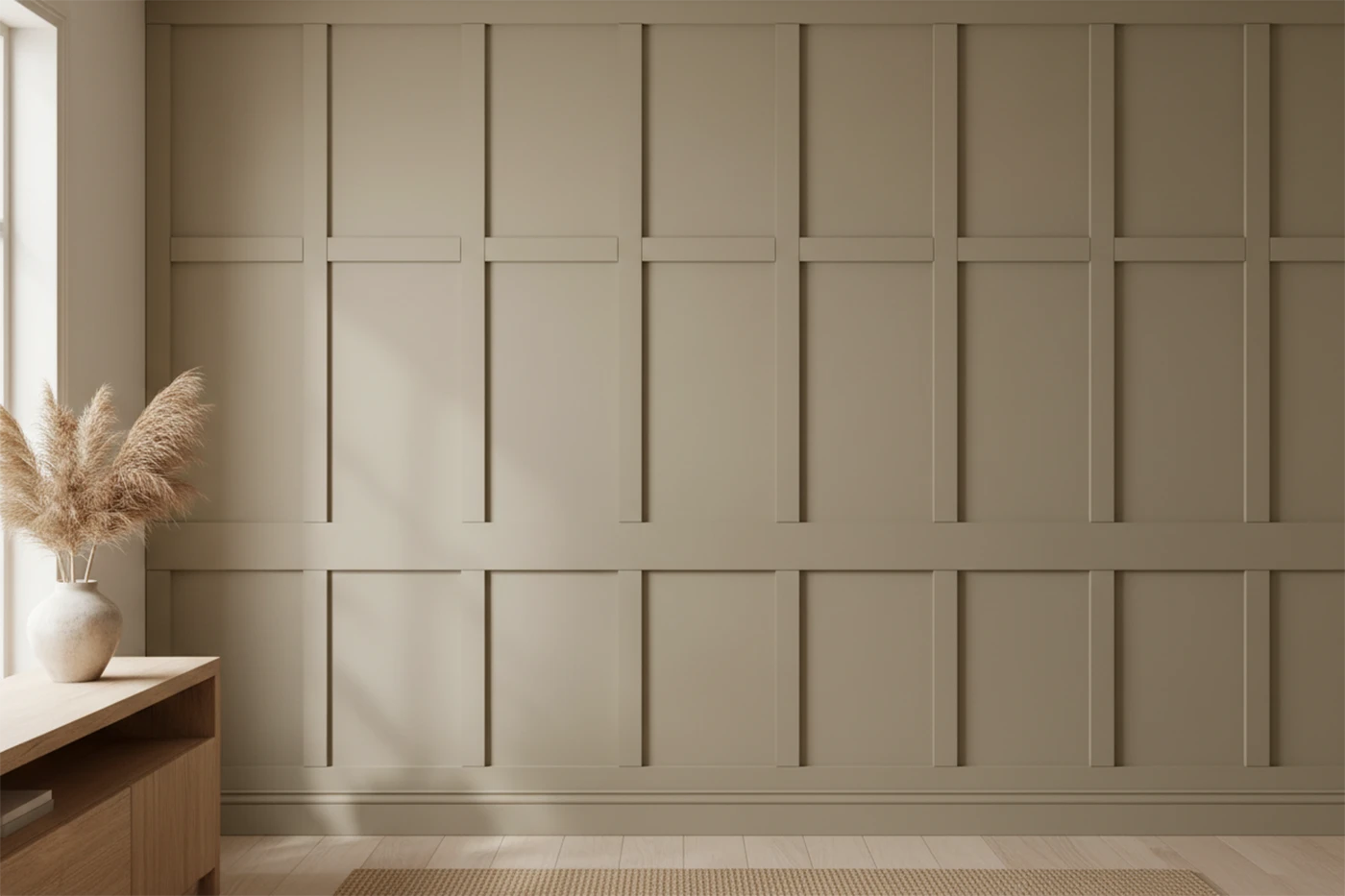
Board and Batten Materials – Wood or MDF?
Wood or MDF is one of the most common questions. Both work. Neither is perfect. The right choice depends on location and expectations. MDF is flat. Predictable. Cost-effective. It paints well. It doesn’t like moisture. Bathrooms and basements need caution. Any water exposure can cause swelling.
Wood handles impact better. It moves more. It costs more. It requires tighter miter cuts. Expansion gaps matter. Seasonal movement must be accounted for. Plywood is rarely used except as a backer board. Trim piece quality matters more than material choice alone. Cheap trim ruins good layouts. Straight stock saves hours of correction.
Finished Board Appearance and Texture
Texture shows everything. A finished board with poor prep will highlight seams forever. Paint won’t hide it. Light and shadows make flaws obvious. Textured wall surfaces need additional prep or skim coating. Board and batten doesn’t forgive uneven drywall. Flatness matters. Skipping this step guarantees visible inconsistencies. Smooth walls produce clean lines. That’s the goal. Crisp edges are what make the wall feel intentional rather than decorative clutter.
Cost Considerations for a Board and Batten Wall
Cost depends on layout, height and material. Simple accent wall installs are affordable. Full-room installs cost more per square foot. Complexity drives price. Details add time quickly. Labor increases with ceiling height, doors and windows and complex spacing. Every interruption adds time. Every corner matters. Trim transitions are where costs rise fastest.
DIY saves labor but increases risk. Professional installs cost more upfront but avoid rework. Fixing mistakes is always more expensive. A clean board and batten accent wall adds value. A poorly executed one does the opposite. That difference shows immediately and stays visible for years.