 (416) 250-6856
 Mon-Fri: 8AM - 4PM

Fire-Rated Drywall vs. Standard Drywall in Commercial Projects – A Contractor’s Comparison
Every commercial drywall scope involves the same early question: where does fire-rated board go and where does standard board go? On smaller projects, the answer is usually obvious. On larger ones — mixed-use buildings, healthcare facilities, multi-residential — the line between required and optional gets harder to read, and the cost of getting it wrong shows up either at inspection or, worse, after occupancy.
This post is a practical comparison for GCs and PMs working on Toronto-area commercial builds. Not a code summary — the OBC handles that — but a contractor’s view of where the real decisions happen, what they actually cost and what separates a clean scope from one that comes back to haunt you at the end of the project.
Standard vs. Fire-Rated Drywall – Core Differences
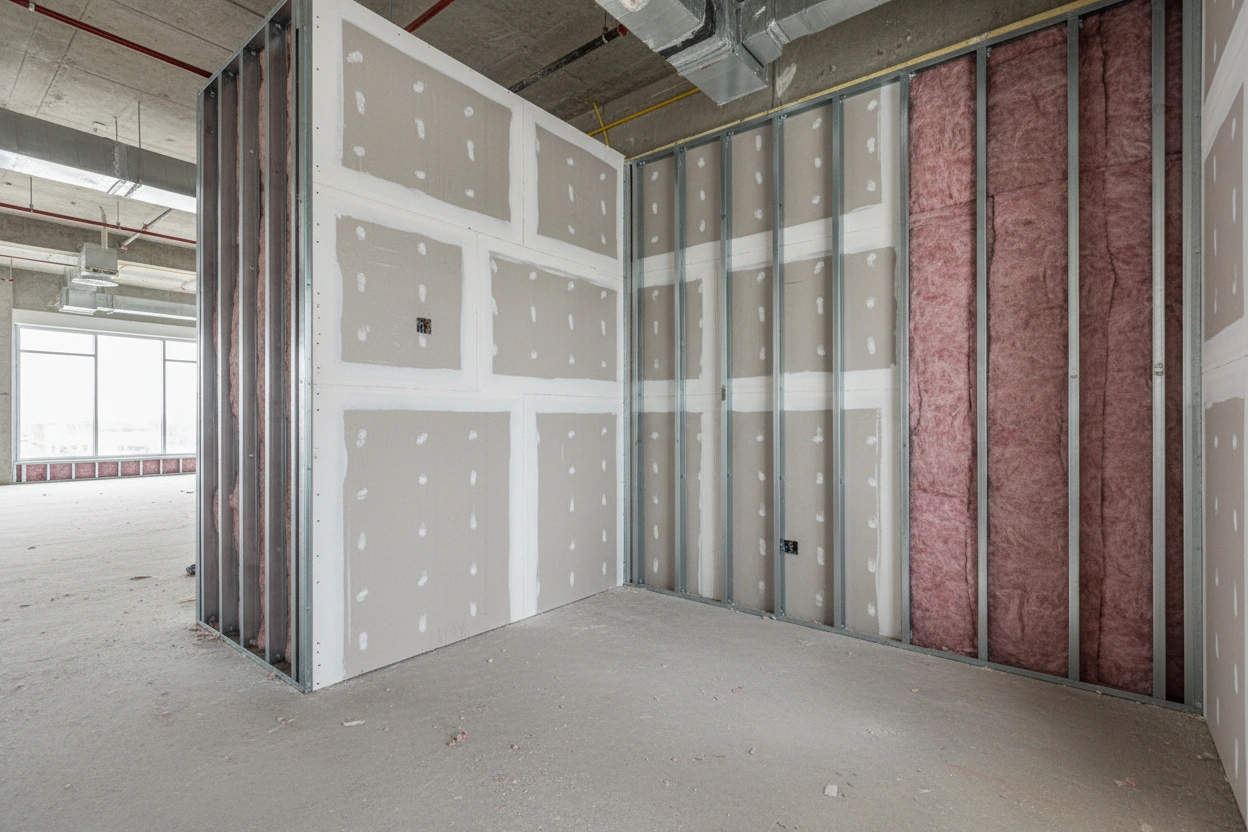
Standard 1/2″ drywall is gypsum board with a paper face and a plain gypsum core. It’s the default interior wall board for most non-rated applications: office partitions, retail fit-outs, interior walls in spaces where no fire separation is required. It’s fast to install, widely available and cost-effective. On most commercial drywall projects, the majority of the board going up is still standard — fire-rated assemblies are specific locations, not the whole building.
Fire-rated board — most commonly 5/8″ Type X — is heavier, stiffer and slightly more expensive per sheet. The core contains glass fibres that hold the board together as it heats, slowing the rate of calcination and extending the time before structural failure or flame penetration. A single layer of 5/8″ Type X on each side of a steel stud wall, properly fastened, is the foundation of most 1-hour assemblies.
The performance difference under heat is significant. Standard 1/2″ drywall will begin to lose integrity within 20–30 minutes of direct fire exposure. A compliant Type X assembly holds for 60 minutes minimum. That gap is what the code is protecting — it’s the time needed for occupants to evacuate and for fire suppression to respond.
But here’s what matters practically: you can’t swap one for the other based on the sheet alone. Fire resistance is a property of the assembly, not the board. A wall built with Type X board but the wrong stud spacing, wrong fastener schedule or wrong number of layers is not a fire-rated wall, regardless of what’s written on the board. The assembly has to match a tested system — referenced by UL design number or NRC test data — and installed to that spec exactly.
When Fire-Rated Board Is Required vs. Recommended
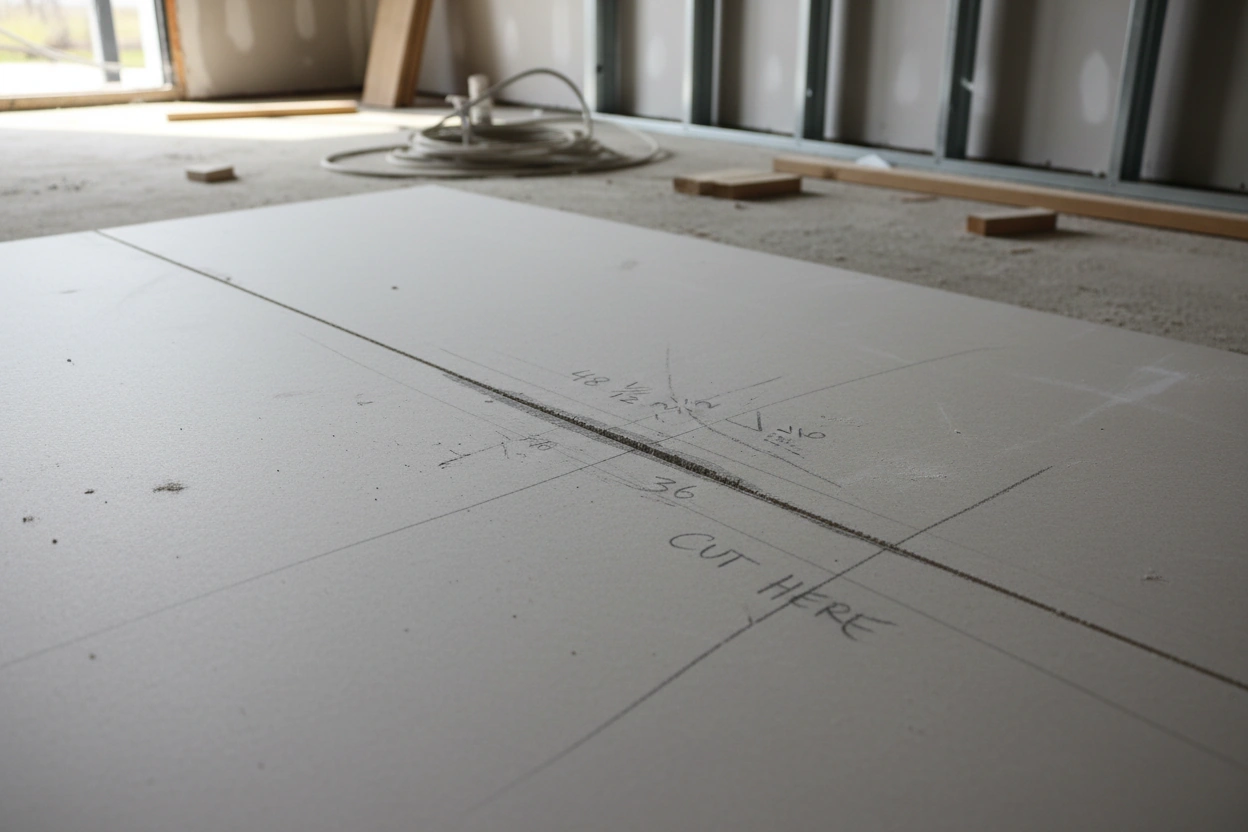
Required and recommended are two different conversations, and conflating them is where projects get into trouble. The Ontario’s Building Code (OBC) is specific about where fire separation is mandatory — but it doesn’t cover every situation a PM or building owner might want to address. Knowing the difference lets you price the scope correctly and avoid surprises at inspection.
When It’s Required by the OBC
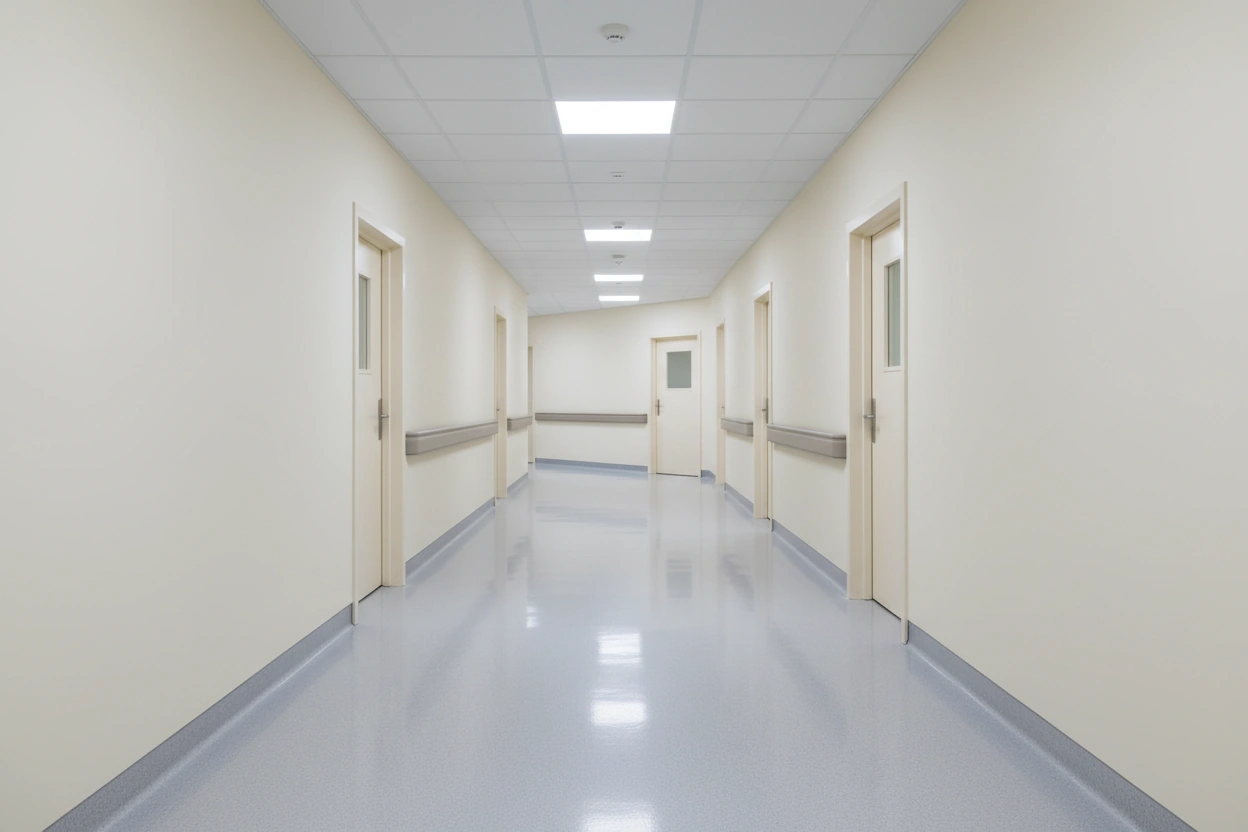
Required means the OBC mandates a fire-rated assembly at that location based on occupancy class, building type and the relationship between adjacent spaces. Examples: demising walls between tenant suites, stairwell and exit enclosures, walls between a parking garage and occupied space, corridor walls in Group B (healthcare) occupancies. These are not discretionary. The inspector will verify compliance, and a non-compliant assembly at a required location means remediation.
When It’s Recommended but Not Mandatory
This covers situations where the code doesn’t mandate a rating but where a PM or building owner might choose to build to a higher standard. A tenant improvement project where the client wants an upgraded demising wall for acoustic and fire performance. A corridor in a low-rise office building that doesn’t trigger a mandatory rating but where the owner wants added protection. These are legitimate decisions — and the cost difference between standard and fire-rated in those locations is usually modest enough that the upgrade makes sense.
The mistake we see regularly: contractors assuming that because one wall in a suite requires Type X, the whole floor does. Or the reverse — assuming that because the space is classified as office, no fire separation applies. Neither is reliable. The answer comes from reading the drawings against the OBC, and if the drawings don’t specify, from asking the question before the board is ordered.
Type X vs. Type C – Which Spec Does Your Project Need?
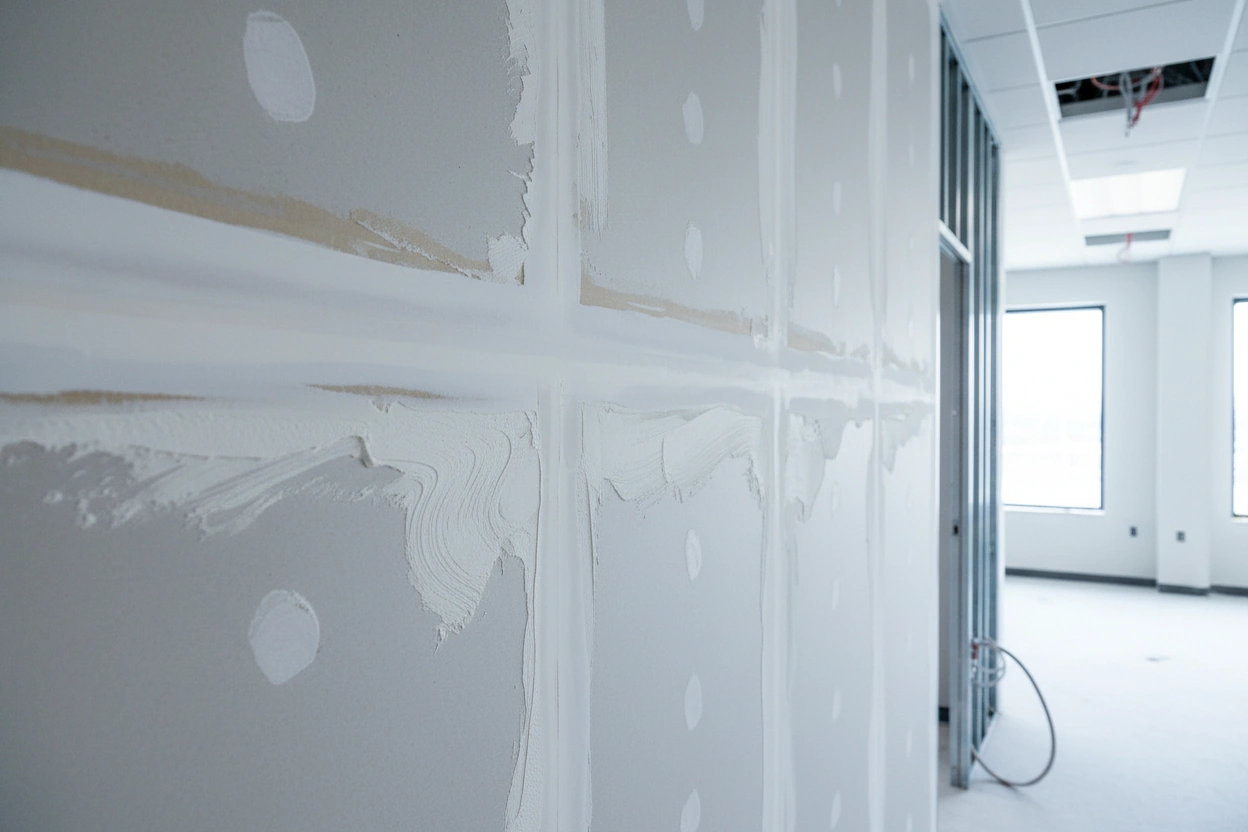
Most GCs are familiar with Type X dywall. Type C is less common but comes up regularly in specific applications, and substituting Type X where Type C is specified is not compliant.
Type C board has a modified core with additional shrinkage-compensating additives — typically vermiculite or glass fibre in higher concentration. Under rapid heat exposure, a standard Type X core can shrink and crack before it calcines fully. Type C is engineered to resist that shrinkage, which improves performance in fast-developing fires and in applications where the assembly needs to maintain integrity under conditions that exceed standard test parameters.
Where Type C is typically specified:
- High-rise residential and mixed-use buildings — OBC construction type requirements
- Healthcare and long-term care facilities — Group B occupancy, higher life-safety requirements
- Shaft wall assemblies — elevator and mechanical shafts where the assembly is exposed on one side only
- Some corridor assemblies in buildings with high occupant loads
On cost: Type C runs roughly 15–25% more per sheet than Type X depending on supplier and market conditions. On a large commercial floor, that’s a material cost difference worth accounting for in the estimate — but it’s not a number that justifies substituting Type X if the spec says Type C. The liability exposure from a non-compliant assembly is not worth the sheet cost.
Cost Implications – Is Upgrading Worth It?
The material cost difference between standard 1/2″ and 5/8″ Type X is real but not dramatic — typically $3–6 per sheet more for Type X, depending on volume and supplier. On a 10,000 sq ft commercial floor with mixed assembly requirements, the incremental material cost of using Type X throughout instead of standard board where it’s not required might be $2,000–4,000. Labour is essentially the same. Whether that number matters depends entirely on the project context.
Standard Upgrades – Usually Worth It
On a tight tenant improvement budget, a few thousand dollars in board cost is a real line item. On a base building scope where the owner is already spending $800K on the drywall package, it’s noise. For most projects where fire-rated board installation is close to being required anyway — or where the PM wants the added protection — the upgrade cost is low enough that the decision is straightforward.
Double-Layer Assemblies – Where the Cost Adds Up
This is where the conversation gets more serious. Double-layer Type X for 2-hour ratings means twice the board, more fasteners, more labour per linear foot and more time on the schedule. On a large multi-residential project with extensive 2-hour party wall requirements, that’s a meaningful line item. Getting the assembly locations right from the start — knowing exactly which walls need 2-hour vs. 1-hour vs. non-rated — directly affects the project budget.
The most expensive outcome is tearing out and redoing. A 1-hour assembly that fails inspection because the fastener schedule was wrong or the board thickness was substituted costs far more to remediate than the original upgrade would have. We’ve seen it on projects where the drywall sub was trying to value-engineer the material costs and ended up adding weeks to the schedule.
Fire Caulking and Penetration Sealing — Don’t Forget the Details
This is the item that gets missed more often than any other on commercial fire separation scopes. The drywall assembly passes inspection. The penetrations don’t.
Every opening through a fire-rated assembly — electrical conduit, plumbing, HVAC duct, data cable bundle — must be sealed with a listed fire-stop system. The board alone does not maintain the rating if there are holes through it. Fire-stop sealant, intumescent wraps, collars for plastic pipes — the specific product and method depends on the penetration type and the assembly rating.
In the GTA, this is not a grey area. Building inspectors on commercial projects look at penetrations, and an unsealed conduit through a 1-hour wall is a deficiency that holds up occupancy. The fix — after the ceiling is closed and finishes are on — is disruptive and expensive.
The right approach is to account for penetrations before the board goes up. That means coordinating with mechanical, electrical and plumbing trades on penetration locations, confirming fire-stop requirements for each type and installing compliant sealing as part of the drywall scope. Express Drywall Services includes fire caulking coordination in our commercial fire-rated scopes — it’s not a separate line item to be sorted out later.
How Express Drywall Services Handles Fire-Rated Scopes in the GTA
Fire-rated work requires a different level of documentation and coordination than standard drywall. We confirm assembly specs before ordering materials, work from tested system references and flag penetration conflicts before board installation. If the drawings don’t specify assembly details clearly, we ask — not after the fact.
Express Drywall Services has completed fire-rated commercial drywall scopes across Toronto, Mississauga, North York, Markham and the broader GTA for more than 20 years. Our work includes Type X and Type C assemblies, shaft walls, 1-hour and 2-hour rated walls and ceilings, fire caulking at penetrations and OBC-compliant corridor separations across office, healthcare, retail and multi-residential projects.
Every commercial project comes with a 1-year warranty. Free on-site estimates within 48 hours. We serve Toronto, Mississauga, Markham, North York and 35+ cities across the GTA.
Ready to scope your fire-rated drywall package? Call (416) 250-6856 or get in touch to book a free estimate.