 (416) 250-6856
 Mon-Fri: 8AM - 4PM

How Many Drywall Colours Are There? Does Drywall Colour Really Matter?
Walk into any supply yard and you’ll notice stacks of drywall sheets that all look similar from a distance – flat, pale and dusty. But when you get closer, you’ll see hints of green, blue, grey, even pink. Those colours aren’t just for looks. Each shade signals a specific kind of drywall colour with its own job to do. We use those colour codes every day in the field to pick the right material for each room and we’ve seen what happens when someone doesn’t. Moisture damage, warping, mold – the wrong board always finds a way to show its mistake.
Let’s break down what each drywall colour means, why it matters and how professionals choose the right one long before the first screw goes in.
Why Drywall Isn’t Always the Same Colour
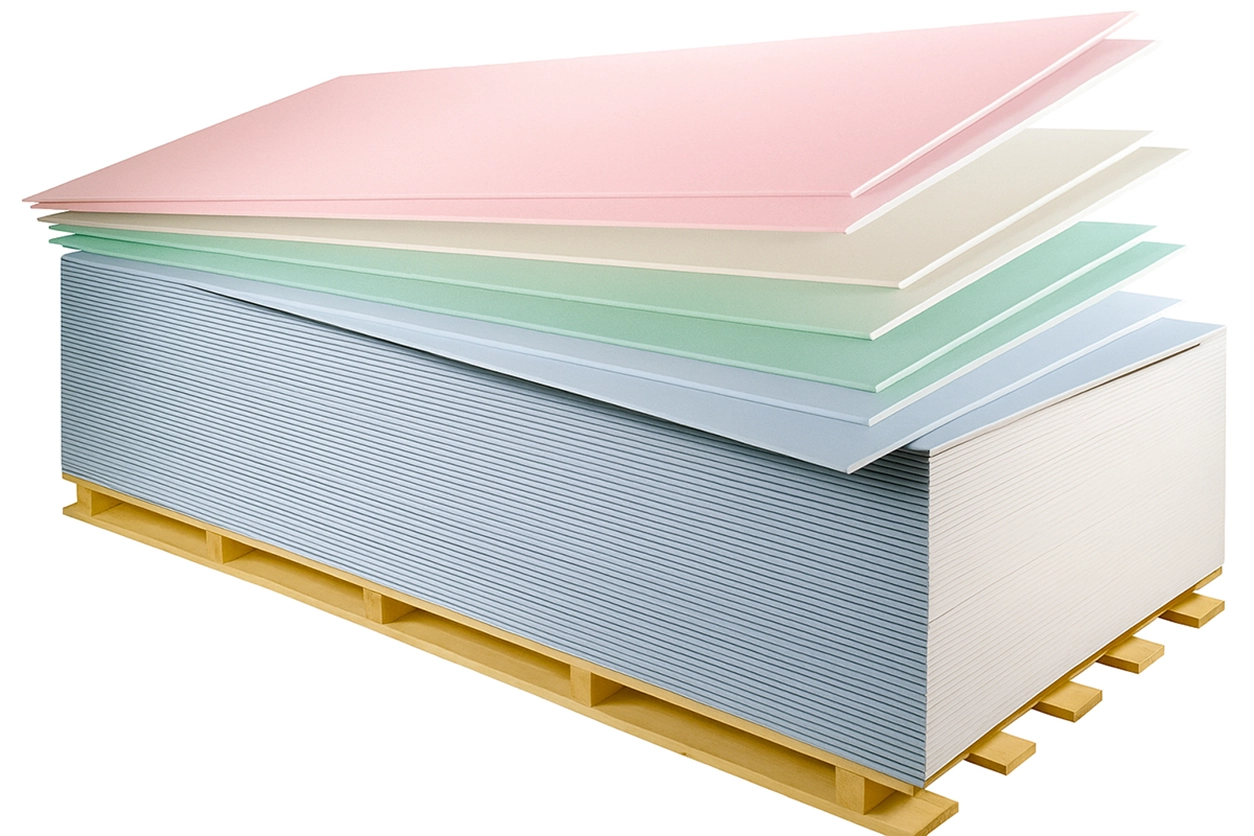
Homeowners often assume drywall is all the same, but that’s like saying every car runs on the same fuel. The gypsum core may look identical, yet the additives, coatings and paper facings vary widely. Those subtle differences change how the sheet reacts to heat, humidity and sound. Manufacturers tint the paper so installers can tell them apart fast – a small detail that prevents major headaches later.
Different colours also help inspectors, builders and safety officers verify that a wall meets code without cutting it open. For example, Ontario’s building regulations require specific fire-rated boards in garages and mechanical rooms. Colour makes that quick to confirm. It’s a visual shorthand that saves everyone time and confusion on site.
We don’t treat colour as decoration; we treat it as information. It’s the first clue to how that wall will behave ten years from now.
Why Drywall Sheets Come in Different Colours
Manufacturers like CGC, CertainTeed and DensArmor use colour coding to mark variations in performance. Green boards repel moisture, Type X grey sheets resist fire and purple boards block mold. The pigments make these distinctions obvious before installation begins. As contractors, we rely on that clarity when we load materials – one wrong pallet can compromise an entire room.
Here’s what those colours really do for us:
-
Speed up on-site identification.
-
Reduce costly installation mix-ups.
-
Simplify inspection and code compliance.
So when you see colour on drywall, think safety, not style.
The Most Common Drywall Colours and What They’re Used For
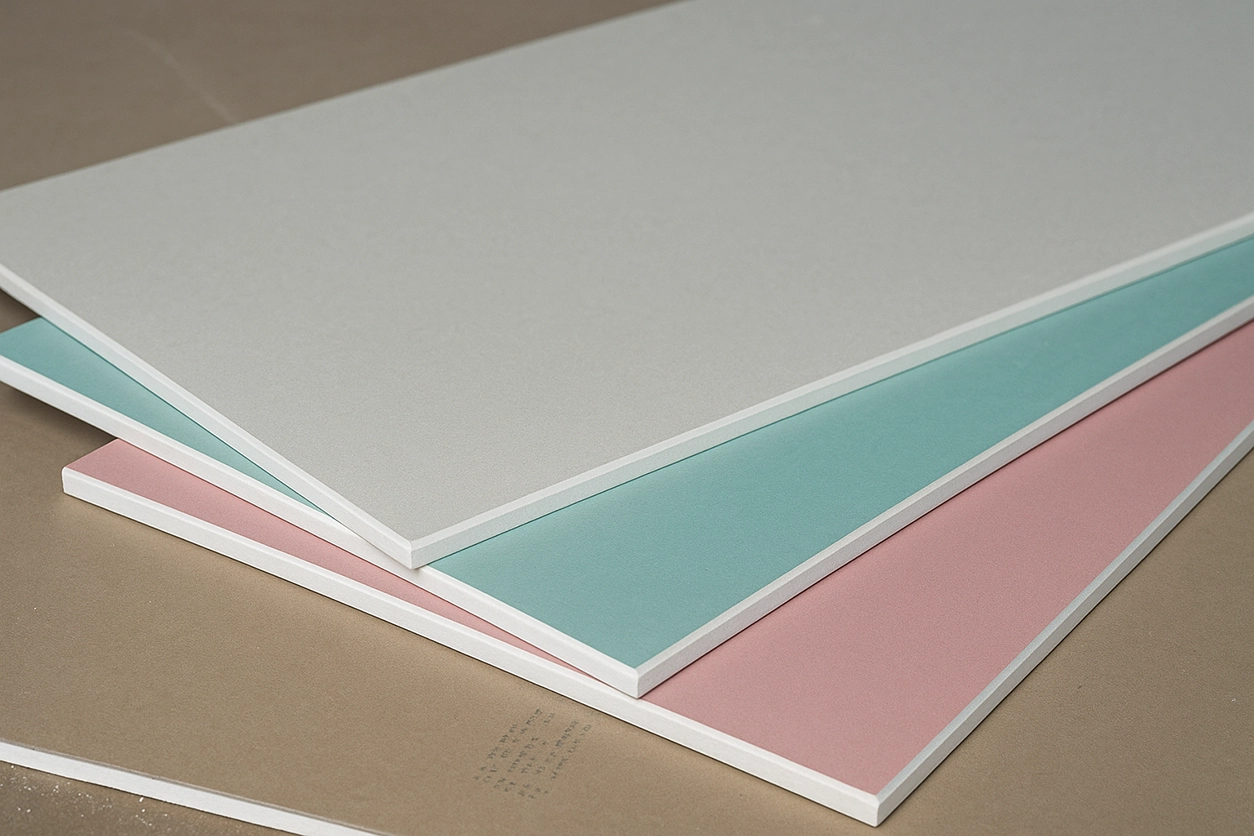
Drywall comes in a range of colours, each matched to a specific environment. Some boards handle moisture; others handle heat or sound. Picking the right one isn’t about preference – it’s about performance. At Express Drywall Services, we select each type based on where it’s going, what’s around it and what the building code demands. It’s a small decision that determines how durable a project will be years down the line.
Let’s look at the main types you’ll find across Ontario homes and commercial builds.
-
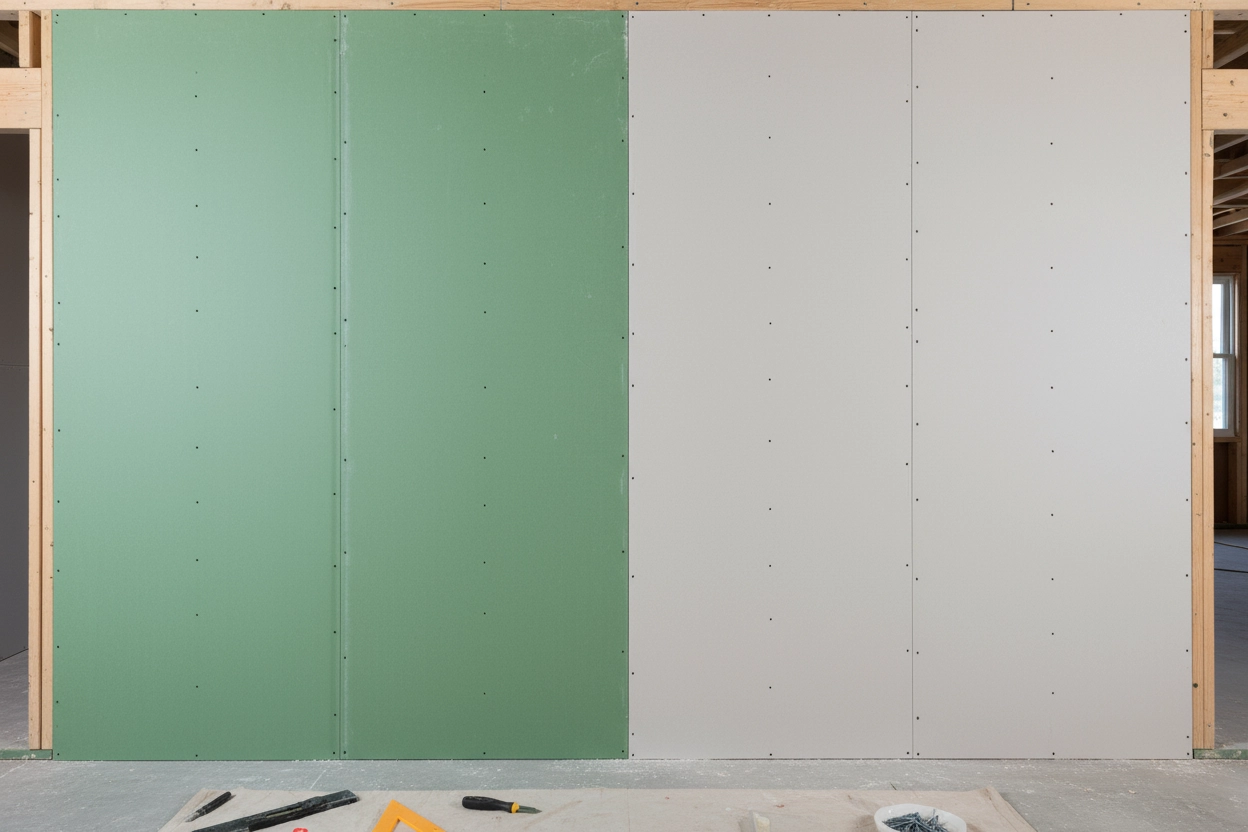
White or Off-White Drywall (Standard Board) – the everyday sheet for living rooms, bedrooms, and ceilings. It’s affordable, easy to cut and finishes smooth.
-
Green Board – treated with moisture-resistant wax, ideal for kitchens, bathrooms and laundry areas. It slows water absorption but isn’t fully waterproof.
-
Blue or Purple Board – mold- and mildew-resistant drywall used in high-humidity zones like medical offices or locker rooms.
-
Grey or Brown Paper Board (Type X) – fire-rated drywall reinforced with glass fibers to meet code in garages, stairwells and mechanical spaces.
-
Pink or Red Panels – specialty fire-resistant sheets that slow flame spread even longer; common in commercial cores.
-
Black Panels – acoustic boards found in theaters, recording studios and office partitions for better sound control.
We’ll admit it – most of us once confused green and blue boards on our first jobs. You only make that mistake once. After ripping out an entire bathroom wall, you start paying attention to colours real fast.
Does Colour Affect Performance – or Is It Just Paint?
People often ask if the colour itself changes the drywall’s strength or texture. It doesn’t. What matters is what’s inside and under that coloured facing. The tint simply identifies the formulation. Still, the properties behind each colour dramatically affect performance: resistance to fire, moisture or sound.
Understanding that difference saves money in the long run. You wouldn’t use exterior plywood for a kitchen cabinet; the same logic applies here. The right drywall in the right place prevents repairs and ensures a flawless finish after paint and primer. Once mudded, sanded and coated, every board looks identical on the surface – the colour never shows through. But the wall’s durability, weight and longevity all depend on what type lies underneath.
It’s a small thing most homeowners never see, yet it’s one of the biggest factors in a wall’s lifespan.
How Colour Reflects Material Properties
Each coloured board carries specific additives in its gypsum core. Green board includes water-repelling agents, Type X adds glass fibers for structural stability during heat exposure and purple drywall has paper infused with anti-fungal treatment. These aren’t gimmicks – they’re performance upgrades built for specific risks.
Here’s what matters most:
-
Match board type to the environment, not the décor.
-
Expect equal finishing quality regardless of colour.
-
Don’t skimp where moisture or fire could be a threat.
Think of it like wiring colours: you won’t see them once the wall closes, but choose wrong and you’ll regret it fast.
Choosing the Right Drywall for Your Project
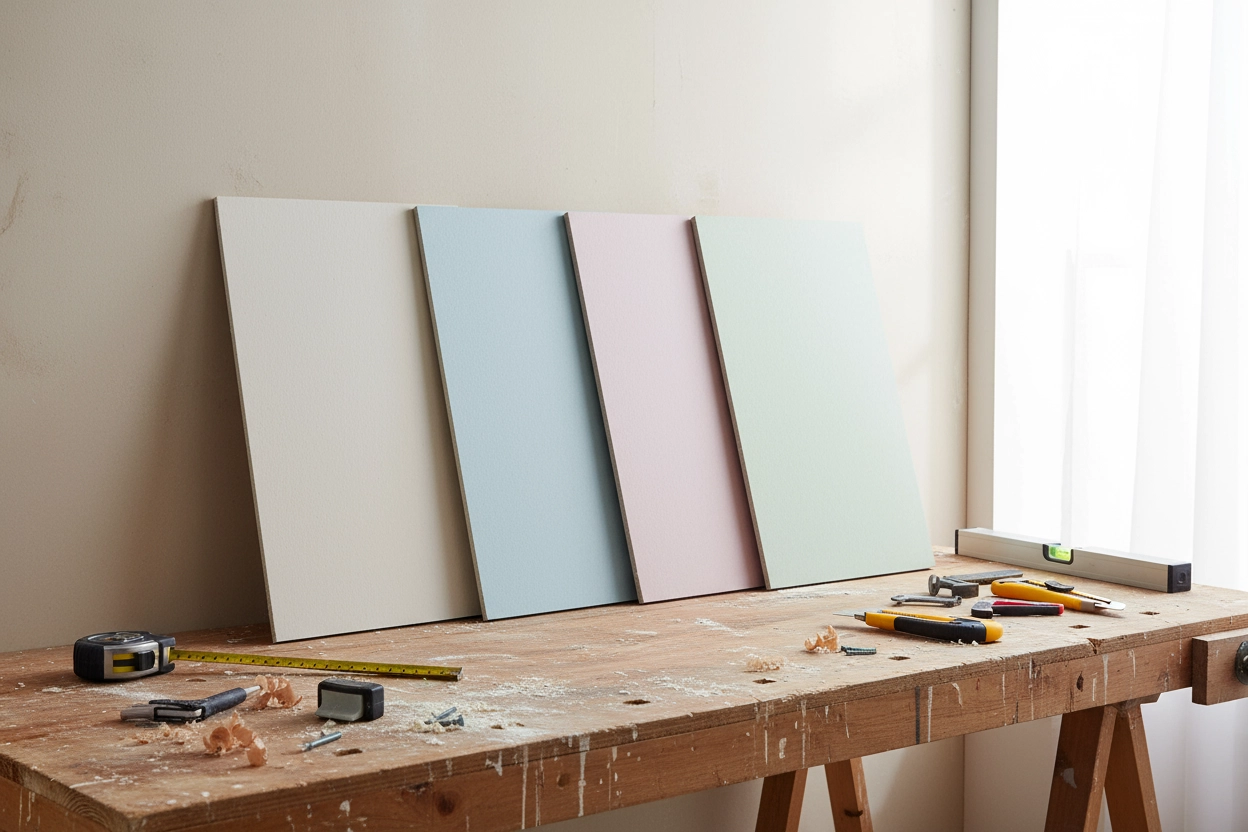
Selecting drywall isn’t guesswork – it’s assessment. We start with the space itself: how humid it gets, what it connects to and what kind of wear it takes. The wrong choice can undermine everything built on top of it, no matter how nice the finish looks. That’s why we inspect, measure and specify materials before the first delivery arrives.
In residential projects, we typically mix types. Standard white board goes in living areas and bedrooms. Green board or purple board handle bathrooms, basements and laundry rooms. Type X covers garages or furnace rooms to meet fire code. Each board has a reason to be there.
Commercial jobs demand a slightly different mix – more fire protection, more sound control. We often combine acoustic black panels with Type X to balance comfort and safety in offices, schools or retail units. Basements and high-traffic corridors get mold-resistant drywall to handle fluctuating temperatures.
We’ve seen plenty of projects fail because someone used standard drywall in damp conditions. The result? Soft corners, bubbling paint and a redo that costs double. It’s cheaper to do it right once than patch it forever.
How We Handle Material Selection at Express Drywall Services
At Express Drywall Services, every installation starts with planning, not mud. Material choice sets the tone for the entire project. Our goal is to prevent problems before they begin – because fixing drywall after it’s finished is never simple.
We follow a consistent process: inspect the site, test for humidity, check framing spacing and match board specs to the conditions. We don’t rely on colour alone; we verify manufacturer markings and edge stamps for accuracy. That’s how we ensure everything aligns with the Ontario Building Code.
Our approach doesn’t just protect clients – it protects our reputation. We work exclusively with certified products from trusted names like CGC, CertainTeed and DensArmor. Every sheet we install has been tested in the field. We know how it reacts to fast temperature swings, how it sands, how it resists mold after a leak. That experience is what separates contractors from hobbyists.
We believe drywall should last as long as the structure itself. Choosing the right board isn’t optional – it’s step one in doing the job properly.
Step-by-Step Approach We Use On-Site
Here’s how we handle it:
-
Site inspection – we assess framing, humidity and access before ordering.
-
Material matching – confirm board type by label and batch number.
-
Installation – only our trained in-house crew handles hanging and taping.
-
Finishing – sanding, priming and paint prep for a seamless surface.
-
Code check – ensure every wall meets Ontario fire and moisture standards.
We never outsource these steps. That’s how we keep full control over quality and scheduling. And yes, sometimes that means catching supplier errors before they reach the wall. We don’t guess by colour – we know what each hue stands for and why it belongs in that specific room.
Final Thoughts – Why Drywall Colour Actually Matters
Colour might seem like a minor detail, but it’s the difference between a surface that lasts and one that fails quietly behind paint. It signals resistance, safety and long-term performance – all invisible once the wall is done. Contractors pay attention to colour because we’ve seen the cost of ignoring it.
When you choose drywall, you’re choosing how your space handles fire, moisture and time. The best installations start with the right materials, matched to the environment and installed with care. That’s where real craftsmanship shows.
Whether it’s a single bathroom or an entire office build-out, remember: the wall’s strength starts long before the paint dries – it starts with colour. And if you’re ever unsure which board belongs where, that’s where we come in.
Need a Drywall Expert Who Knows the Difference?
Express Drywall Services delivers professional drywall installation and precise material selection for homes and businesses across the GTA. We plan, install and finish everything in-house for consistent quality and long-term reliability.
Get your free quote today – and let’s build it right from the start.