
 (416) 250-6856
 contact@drywalltoronto.ca
 Mon-Fri: 8AM - 4PM

Installing Drop Ceiling Tiles – A Complete Guide for Home & Business Owners
Installing drop ceiling tiles is often described as a simple interior upgrade, but in real projects it is a technical decision that affects access, acoustics, fire performance and long-term maintenance. Homeowners usually consider suspended ceilings when they need access to plumbing, electrical or ductwork without opening finished surfaces. Business owners rely on drop ceilings to keep interiors flexible while meeting code and inspection requirements.
At Express Drywall Services, we install drop ceiling systems in both residential and commercial spaces. We are also frequently called in after an initial installation has failed. Uneven grids, sagging tiles and clearance issues are common problems we encounter. In many cases, the ceiling looks acceptable at first but begins to create issues once lighting, HVAC or maintenance access is required. This guide explains what installing drop ceiling tiles actually involves and what to expect when the work is done correctly.
Why Drop Ceiling Systems Are Chosen in Homes and Commercial Spaces
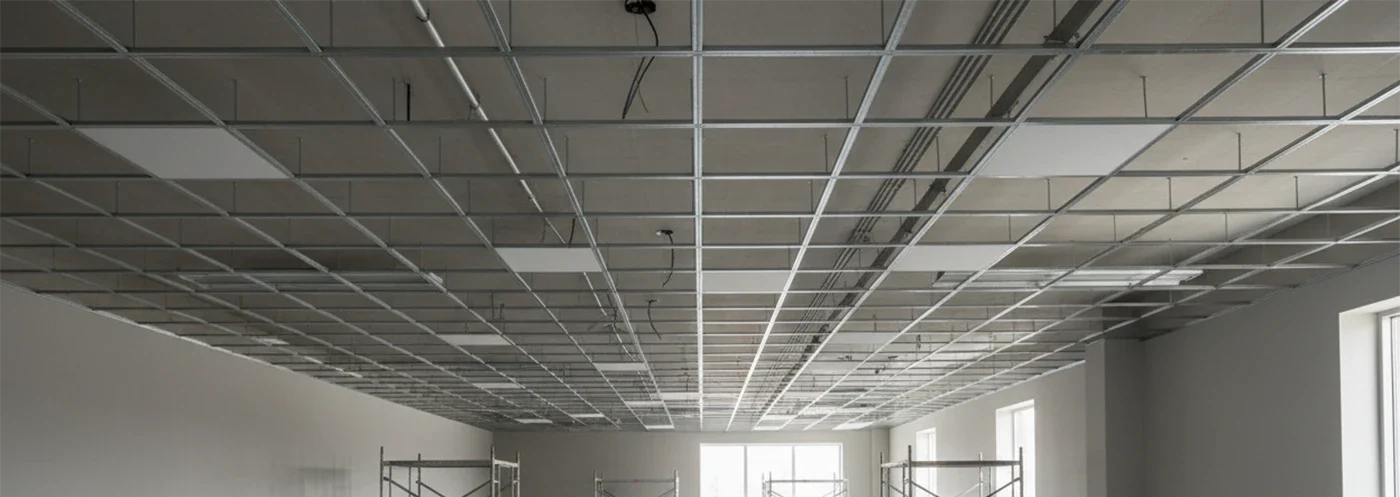
Drop ceiling systems are rarely installed for appearance alone. They are chosen because they solve practical problems that drywall ceilings cannot always address without demolition or major disruption.
Suspended ceilings are often installed in basements, utility rooms and renovation projects where existing framing and mechanical services make a full drywall ceiling impractical. In residential settings, this approach allows the space to be finished while keeping plumbing, electrical and ductwork accessible for future work. That flexibility becomes especially valuable in older homes, where layouts are irregular and changes are more likely over time.
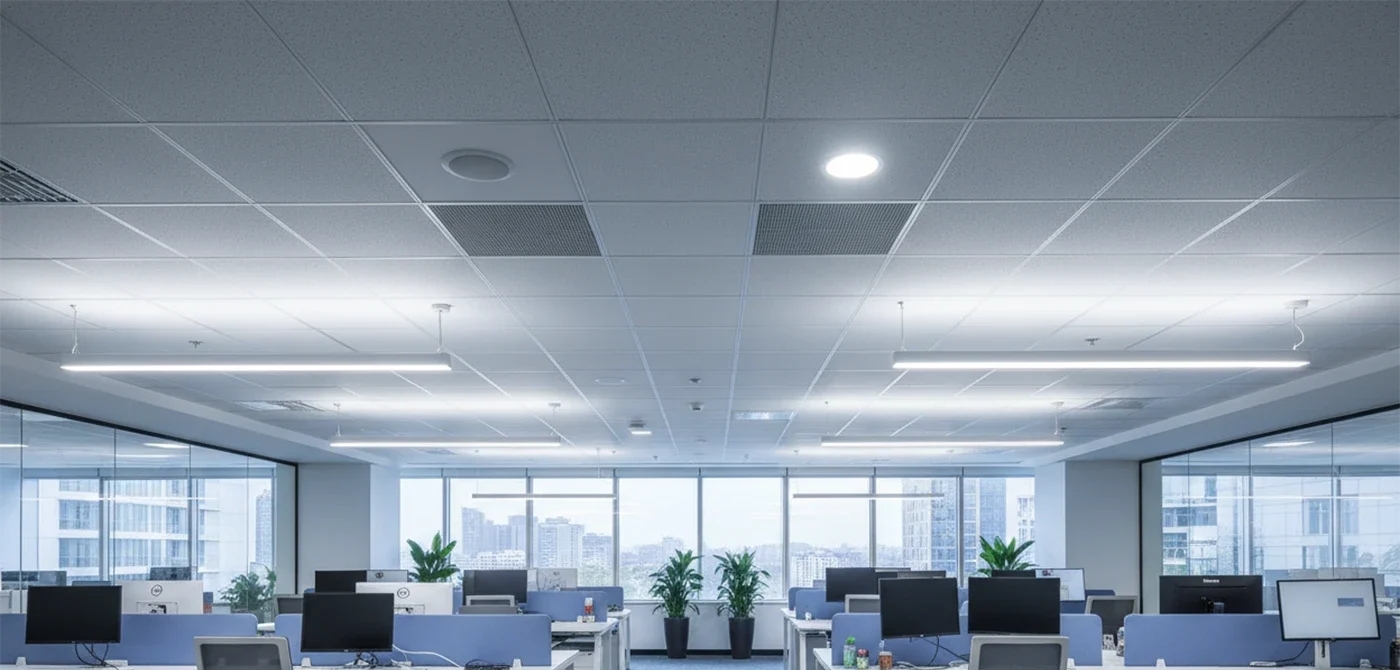
Drop ceilings are frequently included as part of base building requirements for offices, retail units and tenant spaces. In commercial interiors, suspended ceiling systems are used to integrate lighting, ventilation, fire protection and acoustic control without limiting future reconfiguration. This flexibility allows spaces to evolve over time without tearing apart finished interiors, which is essential in leased or frequently updated environments.
Understanding the Components of a Drop Ceiling System
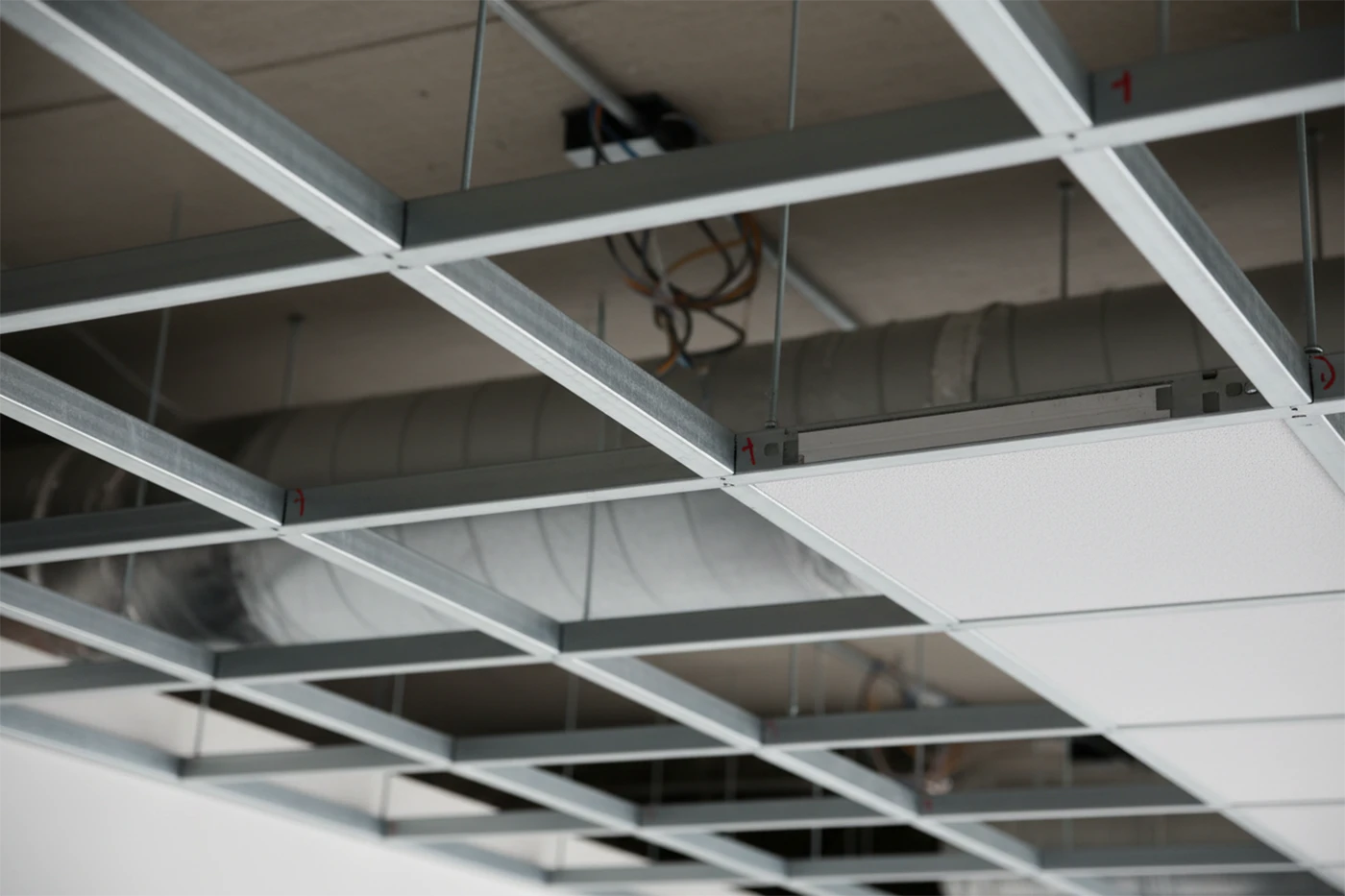
Installing drop ceiling tiles involves more than placing panels into a grid. A suspended ceiling functions as a complete assembly and its performance depends on how well each component is planned and installed. When even one element is chosen or installed incorrectly, problems often appear months later rather than immediately.
At Express Drywall Services, we treat drop ceilings as building systems, not decorative finishes. Every component is selected and installed with load, access and long-term performance in mind.
Ceiling Grid & Suspension System
The grid and suspension system form the backbone of a drop ceiling. Main tees, cross tees and wall angles establish the ceiling plane and carry the combined weight of tiles, lighting fixtures, diffusers and access panels. If spacing is inconsistent or components are under-supported, the ceiling will not remain level over time.
Suspension wires must be anchored into structural framing, not fastened to whatever surface happens to be above the ceiling plane. Improper anchoring is one of the most common reasons ceilings sag or shift. These issues often appear first around heavier fixtures, where movement becomes visible.
At Express Drywall Services, grid layout and suspension points are planned based on expected load, ceiling height and fixture distribution. Support locations are verified before installation begins and spacing is adjusted where lighting or mechanical elements add weight. This planning prevents long-term issues that are difficult to correct once the ceiling is in use.
Ceiling Tile Selection & Performance
Ceiling tiles vary widely in how they perform once installed. Acoustic tiles are designed to absorb sound but may react poorly to moisture. Moisture-resistant panels handle humidity better but often provide less sound control. Fire-rated tiles must meet specific standards and behave differently under load and heat.
Choosing tiles based only on appearance is one of the fastest ways to create future problems. Staining, warping and failed inspections are common when tile performance does not match room conditions. A tile that works well in an office may perform poorly in a basement or utility space.
Tile selection should always reflect how the space is used. Humidity levels, sound control requirements, fire ratings and maintenance access all influence which tile will perform properly long term. Appearance is considered only after performance criteria are met.
Residential Considerations When Installing Drop Ceiling Tiles
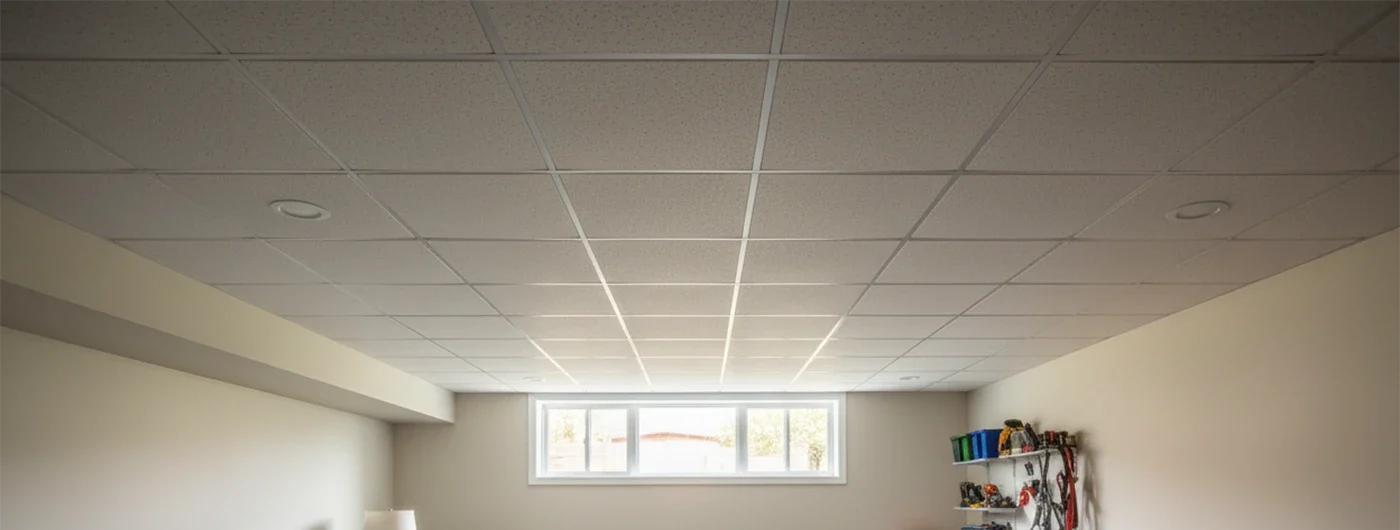
In homes, installing drop ceiling tiles typically happens after framing, plumbing and electrical work are already in place. This makes planning more critical than in new construction, where systems can be coordinated earlier.
Clearance is often the first constraint. Ductwork, beams and piping determine how low the ceiling can drop. Poor planning in this area leads to uneven ceiling heights or awkward transitions between rooms, which are difficult to correct once the grid is installed.
Lighting integration is another common challenge. Recessed fixtures, surface-mounted lights and access panels all require independent support. When fixtures rely on ceiling tiles for support, movement and cracking are almost guaranteed over time.
Sound control is also frequently misunderstood. Drop ceilings can improve acoustics, but only when combined with insulation and appropriate tile ratings. Simply installing tiles without addressing sound paths rarely delivers the results homeowners expect.
Commercial Applications and Code Requirements
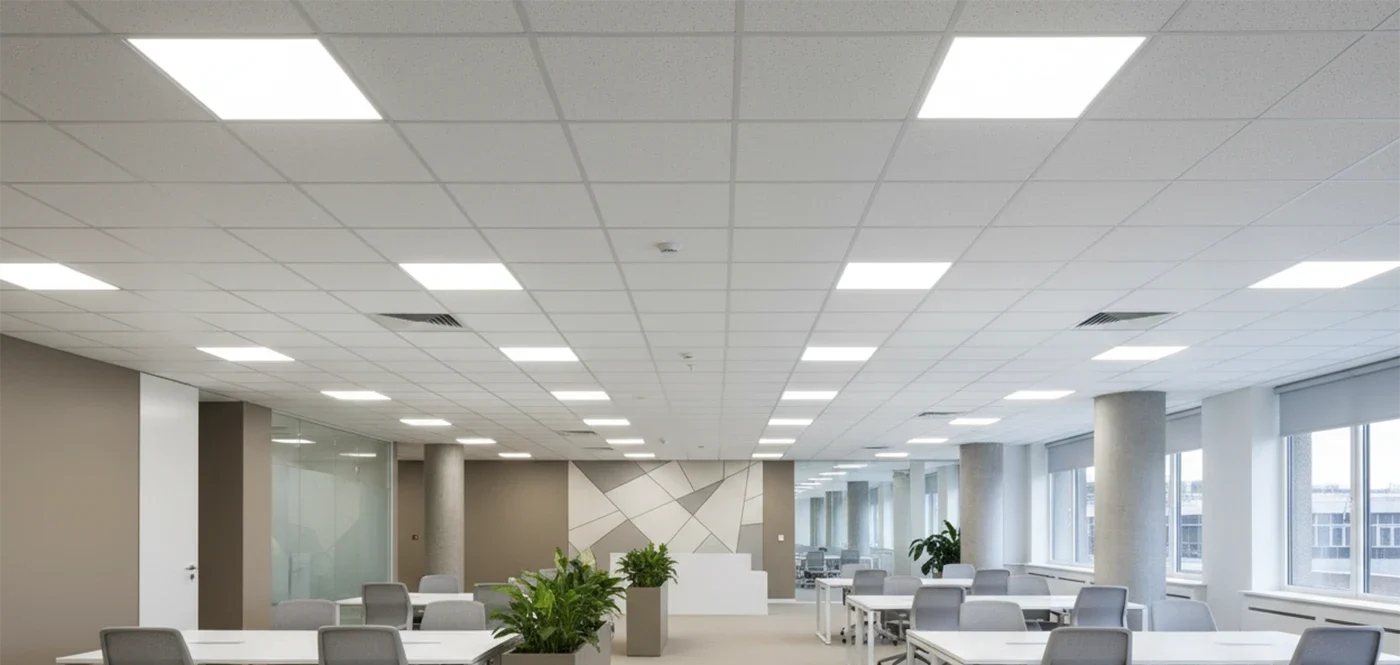
In commercial spaces, installing drop ceiling tiles is closely tied to code compliance and inspection readiness. Unlike residential projects, commercial ceilings are rarely evaluated on appearance alone. Fire ratings, accessibility standards and long-term service access all influence how the system must be designed and installed.
Ceiling height, tile type and grid layout often affect occupancy classification and egress requirements. A suspended ceiling that drops too low or blocks access points can trigger inspection issues even if the installation itself looks clean. For this reason, commercial ceilings must be planned as part of the overall building system, not added as a finishing layer.
At Express Drywall Services, we approach commercial ceiling installations with inspection criteria in mind from the start. This includes understanding how the ceiling interacts with fire separation, mechanical layouts and future maintenance needs. Addressing these factors early helps avoid inspection delays and costly revisions.
Fire-Rated & Acoustic Assemblies
Many commercial ceiling systems must meet specific fire-resistance and sound-control standards. These requirements influence tile selection, grid components and how the ceiling integrates with fire suppression and alarm systems. Fire-rated tiles and grid assemblies behave differently under load and heat, making proper installation essential.
Access panels must be placed accurately to allow inspection and servicing of fire dampers, sprinklers and mechanical components. Ceiling heights must also align with egress and accessibility requirements, particularly in corridors and public areas. Small miscalculations in these areas frequently lead to inspection failures.
When fire and acoustic requirements are not addressed during planning, ceilings that appear finished may still fail inspection. In these cases, sections often need to be opened or rebuilt to achieve compliance.
Coordination With Building Services
Commercial drop ceilings must accommodate a wide range of building services, including lighting layouts, HVAC diffusers, sprinkler heads, speakers and access points. Each of these elements adds load to the grid and affects spacing and suspension requirements.
Poor coordination between trades often results in grid rework, damaged tiles and schedule delays. Fixtures added late or moved without adjusting the grid can cause uneven ceilings and long-term performance issues that are difficult to correct after occupancy.
At Express Drywall Services, we coordinate ceiling installation closely with mechanical and electrical trades. This ensures fixtures are properly supported, access remains clear and the ceiling system stays serviceable over time.
The Installation Process – What Actually Happens on Site
Installing drop ceiling tiles follows a defined sequence and each stage builds on the previous one. Skipping steps almost always leads to visible problems later.
Layout establishes the ceiling plane. Wall angles are installed level around the perimeter, creating the reference point for the entire system. Suspension points are then located and securely fastened to structural framing.
The grid is assembled next. Main tees are aligned, cross tees installed and the entire grid checked for level and square. Only after the grid is stable are tiles and fixtures installed.
Tiles are placed last. Lighting, diffusers and access panels are supported independently to prevent tile damage. This process takes more time but prevents sagging, shifting and misalignment over the life of the ceiling.
Timeline Expectations – What’s Realistic
Timeline expectations depend on room size, ceiling complexity and coordination with other trades.
Small residential spaces may be completed in a few days once layout is complete. Larger basements and mixed-use areas require more time due to adjustments around existing services. Commercial projects are often phased to allow work to continue below the ceiling plane.
Delays typically come from incomplete rough-ins or late design changes. A professional installation accounts for inspections and coordination, not just installation speed.
Pricing – Why Drop Ceiling Quotes Vary
Pricing for installing drop ceiling tiles varies based on scope clarity and site conditions. Ceiling height, tile type, grid quality and access all influence labour time and material requirements.
Fire-rated assemblies, acoustic upgrades and integrated lighting add complexity and should be reflected in the quote. Lower quotes often exclude preparation, coordination or cleanup, which leads to increased costs once work begins.
At Express Drywall Services, pricing reflects actual site conditions. We account for sequencing, coordination and long-term performance rather than just material installation.
Common Mistakes We See on Drop Ceiling Projects
Most drop ceiling issues follow predictable patterns. Common problems include:
- Uneven grids caused by rushed layout
- Fixtures supported by tiles instead of structure
- Tiles cut too tightly, leading to cracking
- Insufficient clearance for access and maintenance
These issues may not be obvious immediately, but they surface over time and often require partial replacement to correct.
When to Contact Express Drywall Services
It makes sense to contact us when installing drop ceiling tiles affects access, inspections or long-term maintenance. This applies to both residential renovations and commercial interiors where flexibility and compliance matter.
If you are planning a drop ceiling and want a system that stays level, passes inspection and remains serviceable over time, contact Express Drywall Services. We review the space, confirm requirements and provide a clear estimate based on how the ceiling will actually function – not just how it looks on day one.