
 (416) 250-6856
 contact@drywalltoronto.ca
 Mon-Fri: 8AM - 4PM

Plaster vs Drywall – Key Differences, Pros & When to Use Each
We work with walls every day. Old ones. New ones. Walls that have been patched five times before we ever touched them. At Express Drywall Services, the discussion around plaster vs drywall is never theoretical. It’s based on what holds up, what cracks, what costs more than expected and what actually makes sense once the wall is closed again. We see failures that started with “it should be fine” decisions made years earlier. Those moments tend to define how we approach wall systems today.
This guide breaks down plaster, drywall and the key differences between them the way contractors see it – through structure, labor, repairs and long-term performance. We’re not trying to sell one option universally. We’re laying out what actually happens once the dust settles. That context matters more than opinions.
Plaster vs Drywall – Understanding the Key Differences
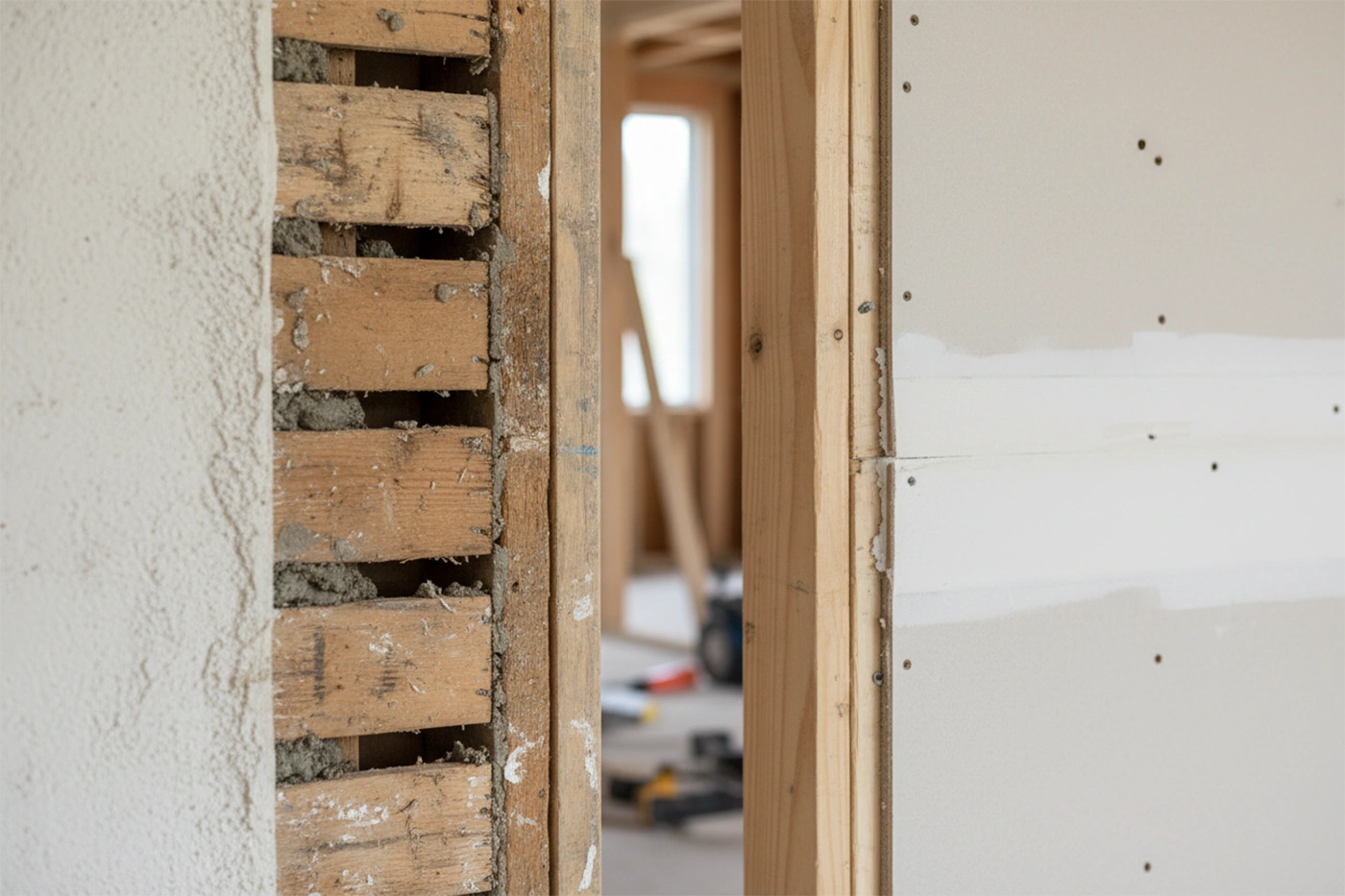
The plaster vs drywall conversation usually starts simple and then gets complicated fast. Both are wall material. Both finish an interior wall. But the systems behind them are completely different. That difference isn’t cosmetic – it’s structural.
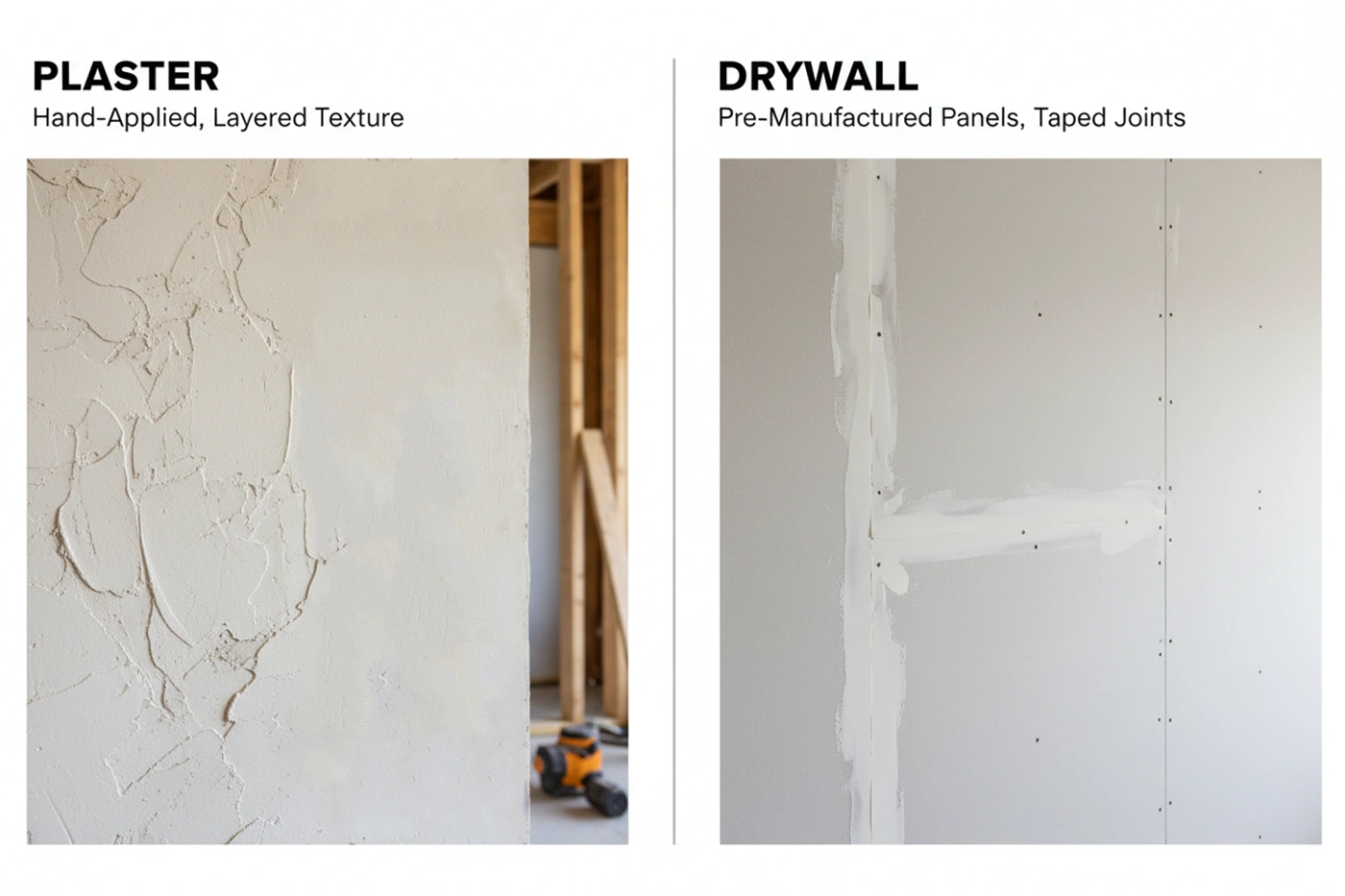
Plaster is a wet system. Drywall is a panel system. That single distinction explains most of the differences between plaster and drywall you’ll see in real buildings. One depends on timing and curing. The other depends on fastening and finishing.
Plaster builds thickness and density through multiple applications. Drywall relies on panels, joint compound and taping and mudding services that control the finish from start to paint. One is built up. The other is assembled. That distinction affects cost, speed and repair options later on.
And that difference shows up everywhere – from cost to repairs to timelines. It also affects how forgiving the wall will be if the building shifts or systems behind it change. Walls don’t exist in isolation.
What Makes Plaster Different from Drywall
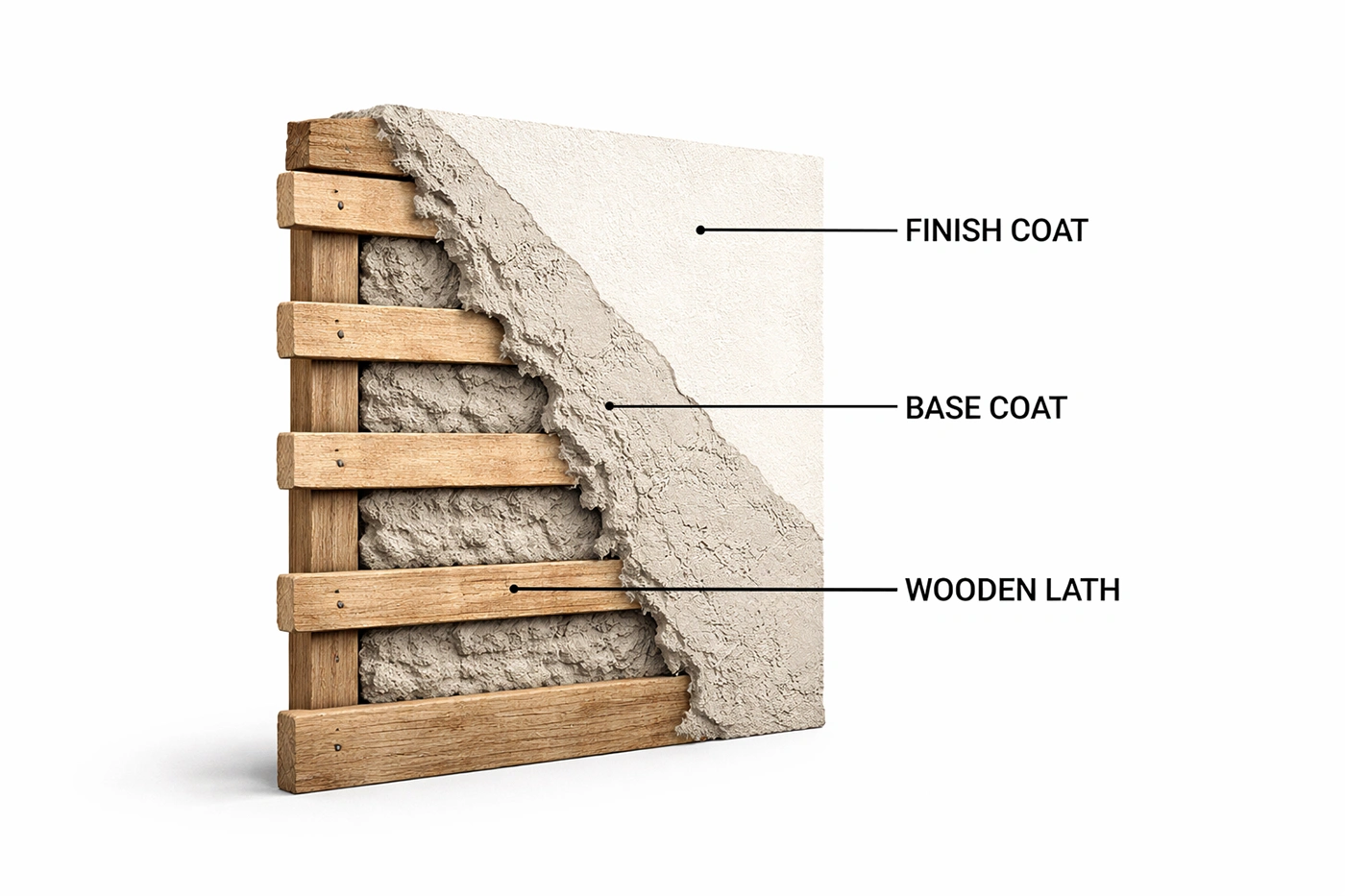
Plaster is applied directly to a substrate. Traditionally that substrate was lath, which allowed the wet plaster to key behind it and lock in place. That mechanical bond is what gave early plaster walls their strength. But it also meant failure could happen behind the surface.
Modern plaster still follows that logic, even when veneer plaster or gypsum plaster is used. The material bonds chemically and mechanically as it cures. That curing process can’t be rushed without consequences. Drywall skips that entire process. Drywall sheets are fastened mechanically. Seams are taped. Drywall mud fills joints. It’s predictable. And predictable matters on a job site when multiple trades are stacked.
Differences Between Plaster and Drywall You Notice Later
The differences between drywall and plaster don’t always show up right away. They show up years later. Usually when something else changes.
Plaster walls feel solid. They dampen sound naturally and add mass. But they crack when buildings move, especially in seasonal climates. Drywall flexes instead of cracking, especially when insulation installation and framing are done correctly. Compared to plaster, drywall is forgiving. And forgiveness matters in real houses. Especially ones that weren’t designed to stay exactly the same forever.
Plaster Wall Construction – Traditional Plaster vs Modern Plaster
A plaster wall isn’t a single surface. It’s a layered system. And the layers matter. Miss one step and the wall pays for it later. Traditional plaster used lath and plaster assemblies with a base coat of plaster, followed by finish coats. Those layers of plaster created strength but also added weight. Older framing was designed for that load. Modern framing usually isn’t.
Modern plaster reduces some of that weight and complexity, but the plaster process is still slow and timing-sensitive. Wet plaster has to cure properly or it fails. There’s no shortcut. Anyone promising speed here is cutting corners.
Types of Plaster Used Today
There are different types of plaster still in use, though not all are common. Each behaves differently once it’s on the wall. Gypsum plaster sets faster and is more predictable. Lime plaster breathes better and handles moisture differently, which matters in older buildings. Veneer plaster is often applied over drywall panels to get a plaster-like finish without full traditional plaster installation. Each option changes cost, timing and repairability. Choosing the wrong one can create more work down the line. That’s why material choice isn’t just preference.
Plaster Installation and Why it Takes Longer
Plaster installation isn’t just applying plaster once. Plaster is applied in stages. A base coat of plaster is laid down. Then a second coat of plaster is applied. Sometimes a third. A coat of plaster is applied, allowed to firm up, then worked again. Coat of plaster is applied again to refine the surface. That takes time and attention. That’s why installing plaster costs more per square foot and requires experienced trades. Plaster requires patience. There’s no rushing it.
Drywall and Plaster Compared in Modern Construction
Drywall and plaster coexist, but they don’t compete evenly anymore. Modern buildings changed the rules. Drywall became dominant because it fits modern construction. Stud spacing, insulation requirements and mechanical systems all favor drywall installation. That alignment wasn’t accidental. Installing drywall is fast. Drywall sheets go up quickly. Finishing drywall is repeatable. And different types of drywall cover fire, moisture and sound needs without changing the workflow.
Drywall vs Plaster for Walls and Ceilings
Drywall vs plaster decisions often come down to scope. Small repairs behave differently than full builds. For full walls and ceilings, drywall is lighter, easier to modify and simpler to repair. Compared to drywall, plaster adds cost without adding flexibility. That trade-off matters. That’s why drywall or plaster choices on new builds almost always land on drywall. It supports change without penalty.
Benefits of Drywall We See On Site
The benefits of drywall aren’t marketing points. They’re practical and visible on site. Drywall allows easier access for electrical changes. Drywall repairs are localized and predictable. Drywall panels can be removed and replaced without disturbing entire surfaces. Unlike plaster, drywall adapts when houses change. And houses always change. Even when owners swear they won’t.
Plaster Job Realities: Cost, Repairs and Risk
A plaster job carries risk. Anyone telling you otherwise hasn’t done enough of them. Risk comes from timing, moisture and structure. The cost of plaster vs drywall becomes clear on site. Plaster costs more per square foot. Labor is higher. Drying time adds days. And repairing plaster later is rarely simple. That cost compounds.
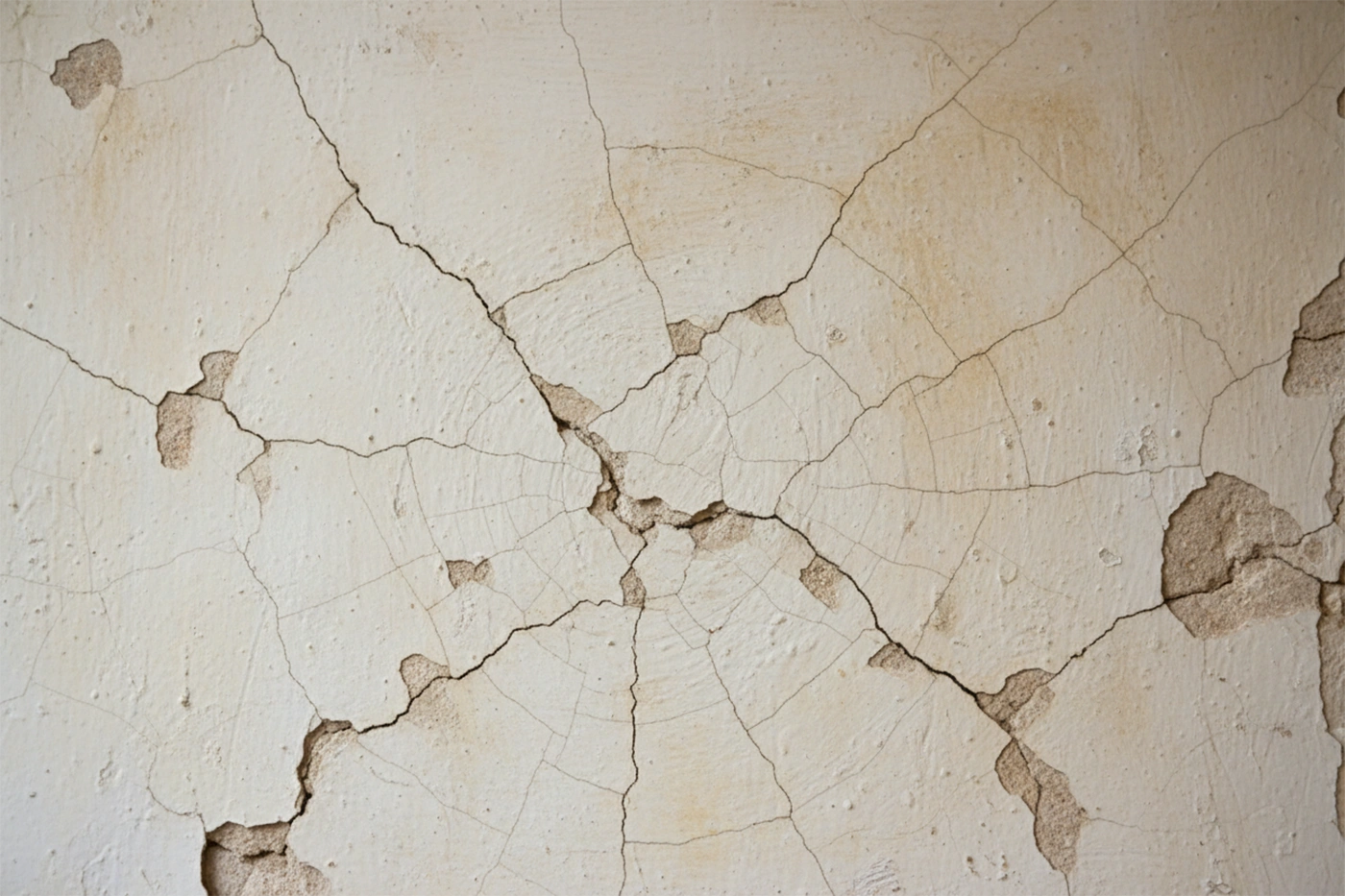
Plaster repairs require matching texture of plaster, controlling moisture and bonding new material to old. That’s also why texturing services matter when you’re trying to blend old and new finishes without a visible patch. Repairing plaster incorrectly leads to visible patches and future cracking. Small mistakes don’t stay small.
Plaster Repairs vs Drywall Repairs
Drywall repairs are controlled. Cut out damage. Patch. Tape. Drywall mud. Done. The process is contained. Plaster repairs are an art. You’re managing wet plaster, bonding agents and existing movement. Compared to plaster, drywall repairs are straightforward and repeatable. That’s why we often recommend stabilizing failing plaster and finishing with drywall over plaster when appropriate. It reduces future risk.
Plaster Over Drywall – When It Makes Sense
Plaster over drywall is sometimes the best compromise. It gives the texture of plaster with the structure of drywall. Veneer plaster systems work well in specific situations. But it’s not universal. Plaster over drywall still adds cost and requires skill. Like drywall, plaster has limits.
Drywall or Plaster – How to Tell Them Apart
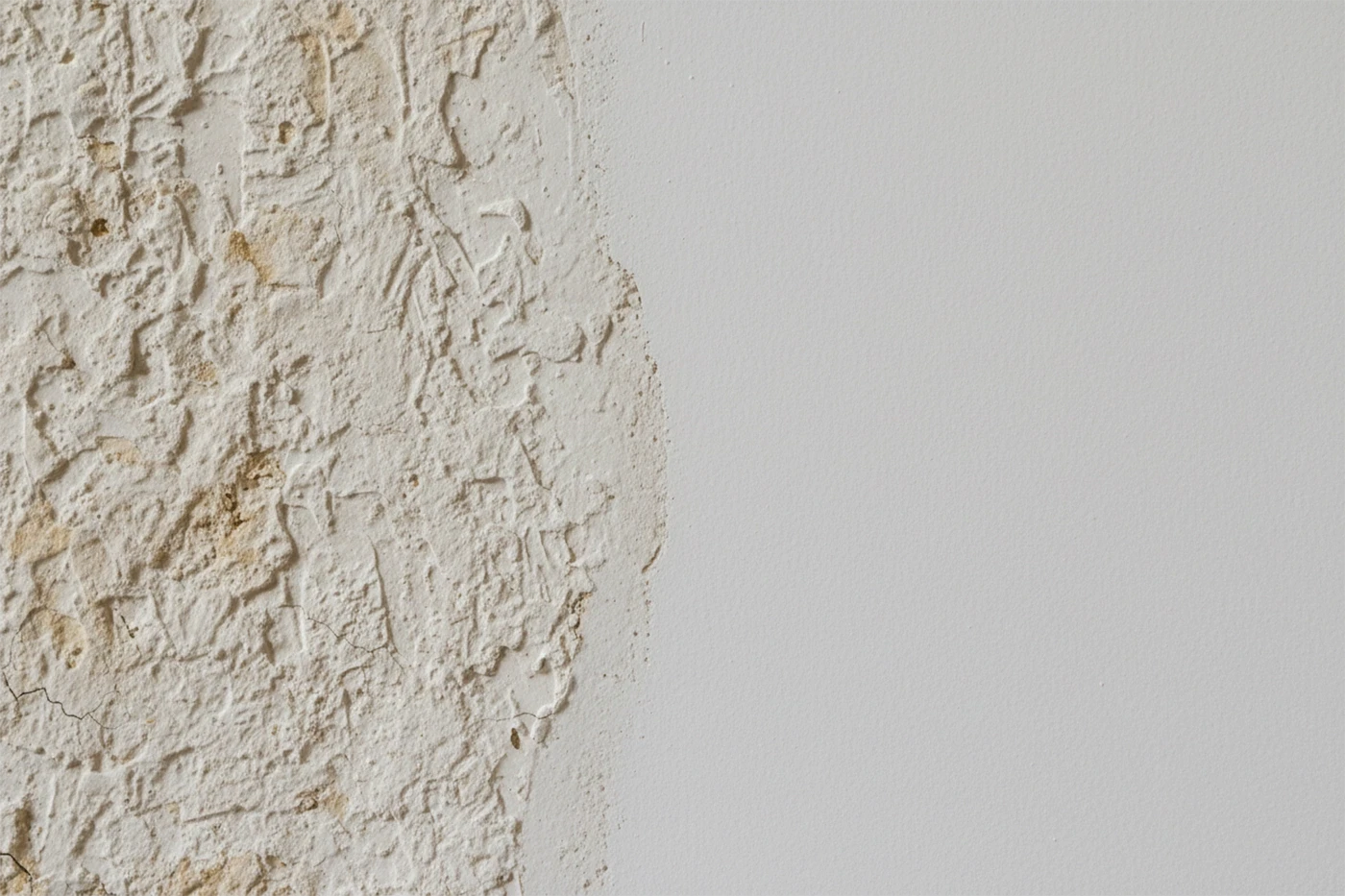
Clients ask this constantly. What’s the difference between plaster walls and drywall walls when everything is painted? If you’re assessing existing walls during a renovation, this is something we handle daily as part of our drywall services in Toronto. The surface lies. There are clues. You just have to know where to look.
Plaster walls sound solid when tapped. Drywall sounds hollow. Electrical boxes recessed deep into the wall often indicate plaster. Cracks with spider patterns usually point to plaster. Still, sometimes the only way to tell them apart is to open a small section. Wall is plaster or drywall isn’t always obvious from the surface. Guessing usually costs more.
What’s The Difference You Feel Day To Day
Plaster feels dense. Drywall feels lighter. Texture of plaster tends to be irregular, even when finished smooth. Drywall finishes are flatter and more uniform. Like drywall, plaster can be finished smooth. But smooth plaster takes more work. And more work means more cost.
Choosing Between Drywall and Plaster for Your Project
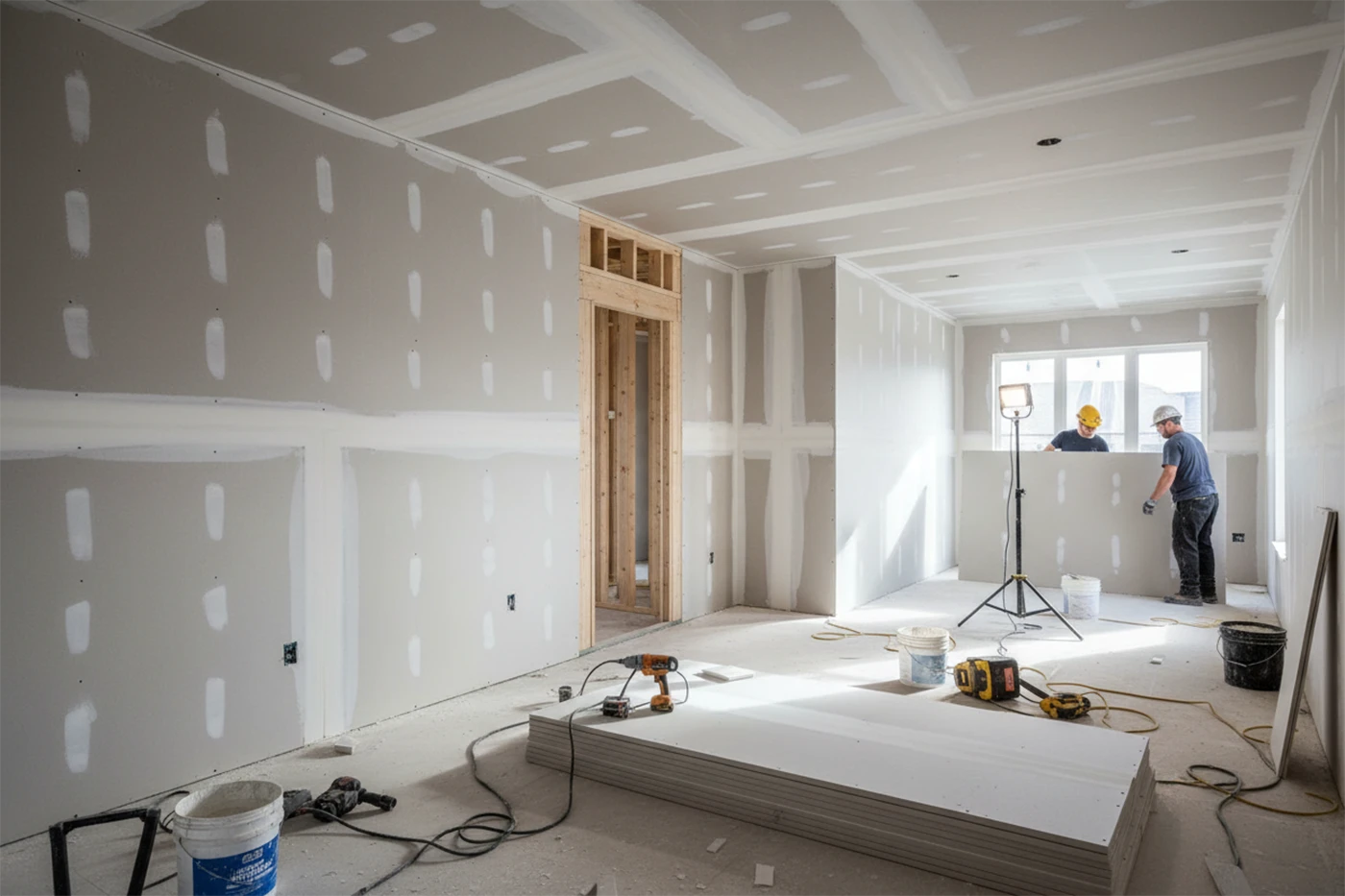
Choosing between drywall and plaster isn’t about trends. It’s about use and future plans. Walls don’t live in a vacuum. Plaster works best when preserving original construction, matching traditional plaster or achieving a specific finish. Drywall works best for new layouts, insulation upgrades and future access. That difference matters long term. Drywall vs plaster decisions should consider structure, budget and long-term changes. Plaster vs decisions that ignore those factors usually end badly.
When We Recommend Drywall Instead of Plaster
We recommend drywall when flexibility matters. When timelines matter. When insulation upgrades are planned. When future drywall repairs are likely. Drywall makes it easier to open walls for wiring, plumbing or layout changes without turning a small update into a major rebuild. It also allows us to keep work moving when multiple trades are involved. On active projects, that predictability reduces delays and coordination issues.
Compared to drywall, plaster is permanent. That permanence can be a liability if change is expected. Once plaster is in place, modifying it usually means more labor, more mess and higher repair costs. In most modern projects, that rigidity works against the way homes and commercial spaces actually evolve.
Our Contractor Rule of Thumb
If the building already uses plaster and it’s stable, we respect it. If the project involves change, drywall or plaster choices almost always favor drywall. That includes renovations where walls are being moved, systems are being updated or insulation performance needs to improve. Drywall supports those changes without forcing compromises elsewhere.
That’s the practical difference. And it saves headaches later. We’ve seen too many projects stall because the wall system couldn’t adapt. Choosing drywall early often prevents those problems entirely.