 (416) 250-6856
 Mon-Fri: 8AM - 4PM

Attic Insulation Tips to Keep Your Home Energy Efficient
When winter hits Ontario, most homeowners feel it first through their heating bills. What many don’t realize is that up to 25% of that heat escapes straight through the attic. Insufficient attic insulation turns your roof into a highway for energy loss. The result? Uneven room temperatures, drafty hallways and an HVAC system that never gets a break.
Why Proper Attic Insulation Matters More Than You Think
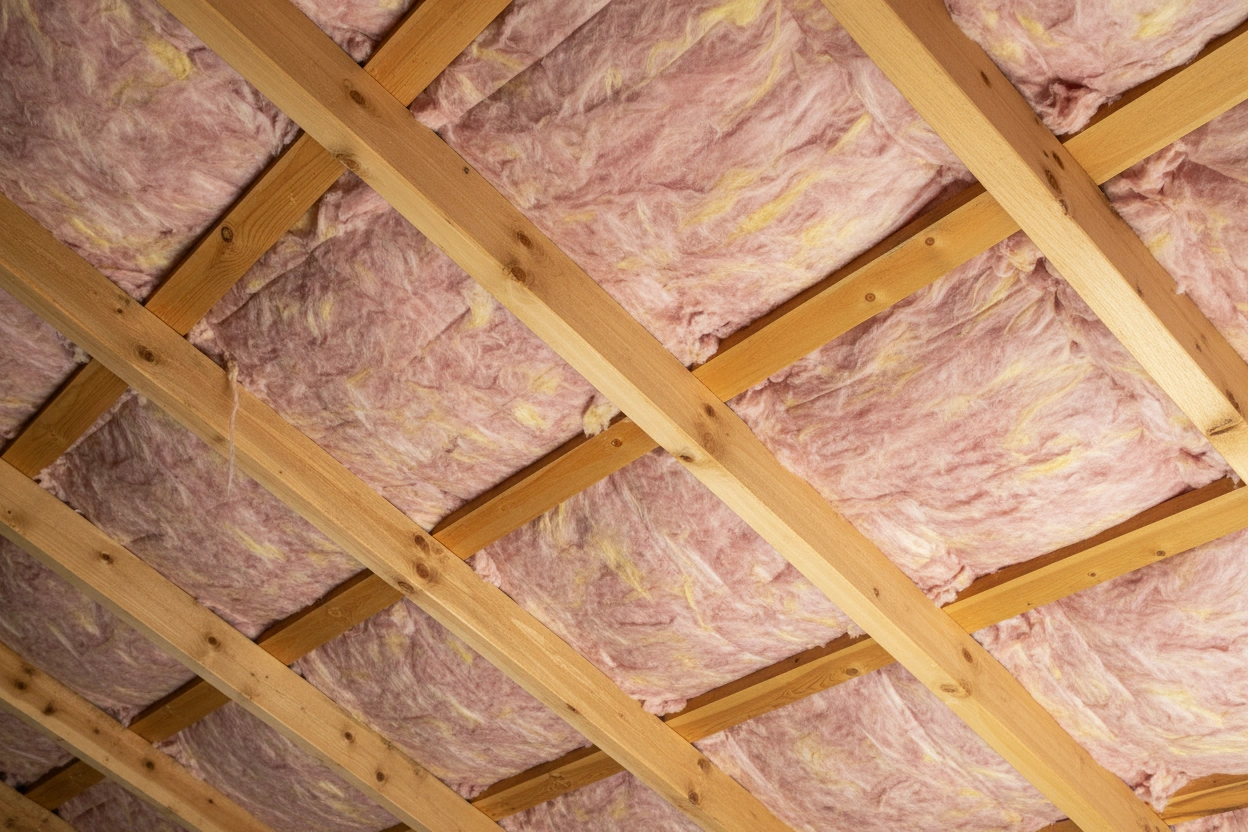
Attic insulation isn’t just about keeping warm; it’s about maintaining consistent indoor comfort while cutting energy waste. In Ontario’s climate, insulation acts as a year-round barrier – trapping warmth in winter and blocking heat in summer. Without it, your furnace and air conditioner run overtime, which drives up hydro costs and shortens system life.
According to the Ontario Building Code, the recommended attic R-value for new homes is R-60 or higher. That’s roughly 18 to 20 inches of fiberglass batt or 15 inches of blown-in cellulose. Many older homes, especially those built before the 1980s, barely reach R-20. It’s not enough for today’s energy standards.
Insulating your attic properly also helps control humidity and condensation, which are silent destroyers of drywall, framing and paint. We’ve seen countless attic spaces where thin insulation led to mold behind ceiling drywall – a fix far more expensive than prevention. We see the difference every time we remove old insulation and install fresh, high-R-value material. The next month’s utility bill always proves the point.
Common Signs Your Attic Insulation Needs an Upgrade
Most homeowners don’t check their attics often, so insulation problems can linger for years. But there are telltale signs that your attic insulation isn’t performing the way it should. The sooner you catch them, the more energy (and money) you’ll save.
If your home feels drafty even when the thermostat reads high, it could be air escaping through the ceiling. Another warning sign is uneven temperature – one room freezing while another feels tropical. Condensation around attic vents or frost on roof nails during cold mornings means warm indoor air is leaking out and cooling at the roof deck.
Your energy bill is another clue. If costs have climbed despite consistent usage, your attic insulation might have settled or compressed over time. Wet spots, musty odours or visible mold growth are red flags too. And if your roof forms thick ice dams in winter, that’s your attic telling you it’s under-insulated.
Here’s a quick checklist:
-
Uneven temperature between rooms
-
Drafts despite closed windows and doors
-
Rising heating or cooling costs
-
Condensation or frost in the attic
-
Ice dams forming on roof edges
If you’re nodding at more than one of these, it’s time to inspect your attic insulation.
Types of Attic Insulation and Their Benefits
Not all attic insulation materials perform the same. The best choice depends on your home’s structure, access points and climate exposure. In Ontario, we often deal with high humidity and temperature swings, so insulation needs to handle both. It’s not just about thickness – density, air sealing and moisture control all play a role.
We work with materials certified to Canadian safety and energy standards, because quality matters more than brand names. Cheap insulation saves a few dollars upfront but loses efficiency fast once it settles or absorbs moisture. Every attic has its own quirks – from low slopes to tricky joist spacing – so we match the insulation type to the layout, not the other way around. Here are the main options homeowners usually consider, each with pros, trade-offs and ideal applications.
Fiberglass Batt Insulation
Fiberglass batts are the classic choice. They’re cost-effective, widely available and easy to layer for high R-values. We use them mostly in open, accessible attics where fitting standard sizes between joists makes sense. The main advantage is durability – once installed correctly, fiberglass resists moisture and sagging. However, gaps or compression can reduce performance by up to 30%, so precision matters. When installed tight and sealed around vents and electrical boxes, batts deliver long-term comfort at a fair cost.
Blown-In Cellulose
Blown-in cellulose offers excellent coverage, especially for irregular or hard-to-reach spaces. It’s made from recycled paper treated with fire retardant, giving strong eco-friendly credentials without compromising performance. Because it settles into every gap, it creates a more continuous blanket of protection than batts.
We use this method frequently for older attics with uneven joist spacing or limited access. It also works well as a top-up layer on top of existing fiberglass to improve R-value. The main consideration? Cellulose can absorb moisture, so proper ventilation and vapor barriers are key.
Spray Foam Insulation
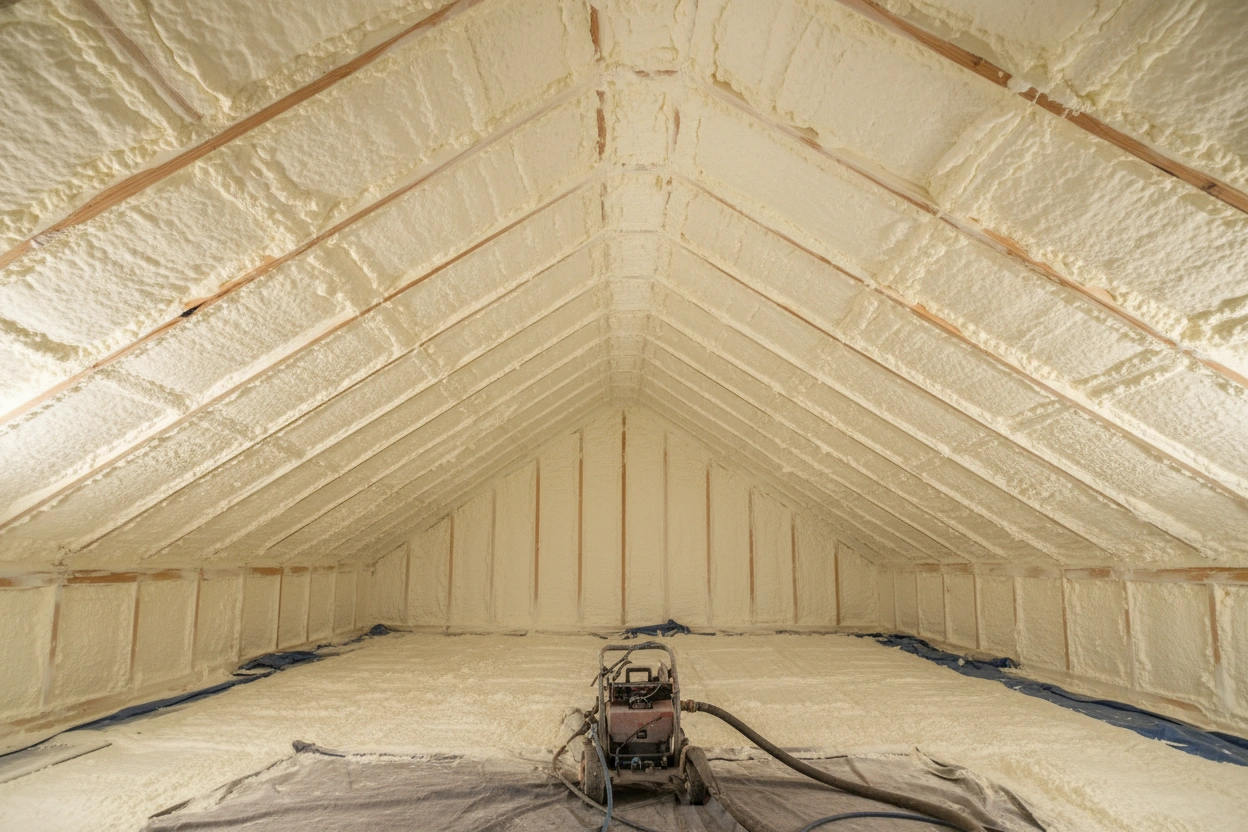
Spray foam is the premium choice when air sealing and maximum efficiency are priorities. It expands to fill cracks, sealing leaks and creating an airtight envelope. In cold climates, that means zero drafts and lower utility costs year-round.
It’s ideal for cathedral ceilings, attics with complex framing, or renovation projects where we want to prevent moisture from entering the building envelope. The trade-off is cost – spray foam runs higher, but the performance gain often justifies it over time. Sometimes homeowners think they can just “add more insulation on top,” but that only helps if the air barrier is intact. Without sealing leaks first, even R-80 won’t perform like R-40 properly installed.
How We Approach Attic Insulation at Express Drywall Services
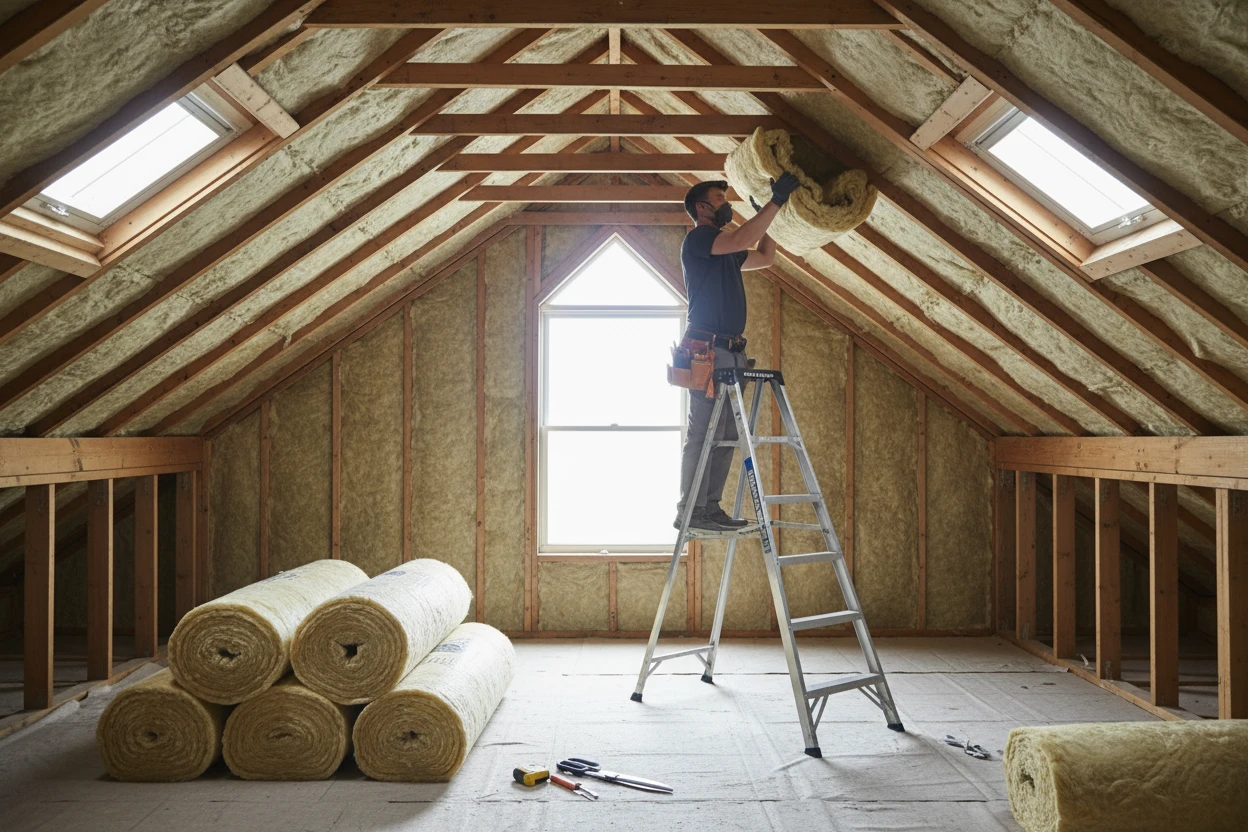
Every attic tells a different story. Some look fine at first glance but hide air leaks behind light fixtures. Others show uneven layers or insulation stuffed into corners without coverage. Our process focuses on precision – we fix the root problem, not just the symptom.
Before we lift a single batt, we assess airflow, vapor control and structural conditions. Then we recommend materials based on your attic’s layout and moisture exposure. A home near Lake Ontario faces different humidity challenges than one inland. We adjust for that.
We also check for attic bypasses – small openings around pipes, chimneys and electrical wiring where warm air escapes. These are the invisible culprits behind most insulation failures. Sealing them before adding new insulation ensures lasting performance.
Our crew uses only certified products that meet or exceed Ontario Building Code R-value requirements. We install everything ourselves – no subcontractors – to maintain consistent quality. And yes, we document every step, so homeowners can see exactly what’s inside their attic once we’re done.
Step-by-Step Process We Follow
-
Inspection & Evaluation – Check existing insulation depth, type and moisture condition.
-
Air Sealing – Seal penetrations, vents and junction boxes to stop warm air leaks.
-
Material Selection – Choose fiberglass, cellulose, or spray foam based on attic design and budget.
-
Installation – Even layering or foam application to ensure continuous coverage.
-
Final Check – Verify R-value levels, vapor barrier integrity and ventilation flow.
We don’t cut corners or skip steps. We insulate once – and insulate right.
Maintenance Tips for Long-Term Energy Efficiency
Even the best attic insulation needs periodic attention. Over time, gravity, moisture or rodent activity can reduce effectiveness. Checking your attic every few years helps you catch issues before they lead to bigger repairs.
Start with ventilation – clear soffit vents and ensure air flows from eaves to ridge vents. Blocked airflow traps moisture, which can degrade insulation and promote mold. If you notice insulation pushed down or shifted by previous work (like wiring or HVAC updates), gently fluff it back to its full thickness.
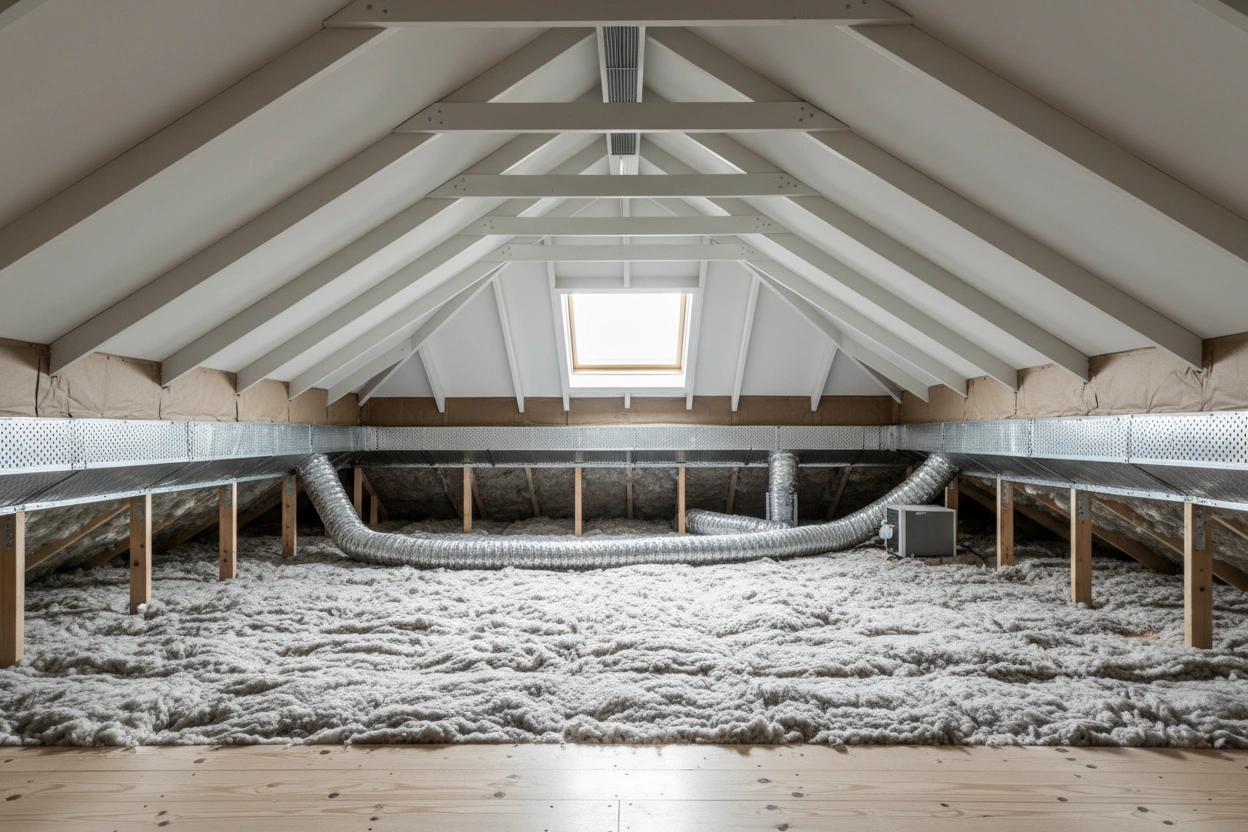
Never store heavy boxes directly on insulation; compression reduces R-value. If you must access the attic often, install raised flooring panels above the joists. For blown-in insulation, top up every 5–7 years to maintain target R-value.
Also, keep an eye on humidity. High indoor moisture can migrate upward, condensing in cold attic corners. Use proper vapor barriers and ensure bathroom or kitchen exhaust fans vent outside, not into the attic. These small checks extend insulation life by decades.
The Real ROI of Attic Insulation
Upgrading attic insulation delivers one of the highest returns on investment for home efficiency improvements. In Canadian climates, improved insulation can reduce heating and cooling costs by 20–30%. Over a few winters, that savings adds up quickly.
Beyond cost, it boosts property value. A well-insulated attic signals that the home has been properly maintained – something every buyer appreciates during inspection. You’ll also notice better comfort: fewer drafts, quieter rooms and a stable indoor climate regardless of the season.
Modern insulation also protects structural integrity. By preventing condensation, it helps preserve rafters, drywall and paint. That means fewer ceiling cracks and less repainting down the road.In our experience, a properly insulated attic pays for itself in three to five years, then keeps saving energy for decades. It’s one of those upgrades that never stops working once done right.
Final Thoughts – A Warmer, More Efficient Home Starts at the Top
Insulation might not be something you see every day, but it’s one of the biggest reasons your home feels comfortable year-round. A strong attic barrier means lower bills, less wear on your HVAC and fewer temperature swings between floors.
Don’t think of attic insulation as a “nice-to-have.” Think of it as part of your home’s structure – like the roof itself. Every nail, beam and sheet of drywall depends on it to stay dry, stable and energy-efficient.
At Express Drywall Services, we treat every insulation job as a long-term investment, not a quick patch. We know what works for Canadian homes because we live and build here too. If you’re ready to stop wasting energy through your roof, we’re ready to help.
Ready to Improve Your Attic Insulation?
Express Drywall Services provides professional attic insulation for homes across the GTA. From inspection to installation, our team ensures maximum efficiency, code compliance and comfort that lasts.
Get your free quote today – and keep your energy where it belongs: inside your home.