 (416) 250-6856
 Mon-Fri: 8AM - 4PM

Where Moisture-Resistant Drywall Is Required in Commercial Buildings
Most commercial building owners think about drywall once — during construction — and never again. That’s fine, until a bathroom wall starts crumbling or a kitchen ceiling develops black spots six months after opening. Moisture does real damage to standard drywall, and in a commercial setting, that damage comes fast.
At Express Drywall Services, we’ve worked on hundreds of commercial projects across Toronto and the GTA. Restaurants, medical clinics, office towers, schools — the question we hear most often isn’t “should I use moisture-resistant drywall?” It’s “where moisture-resistant drywall is required?” This guide answers that directly.
The short answer: more places than you’d think. The detailed answer is below.
What Is Moisture-Resistant Drywall and How Does It Work?
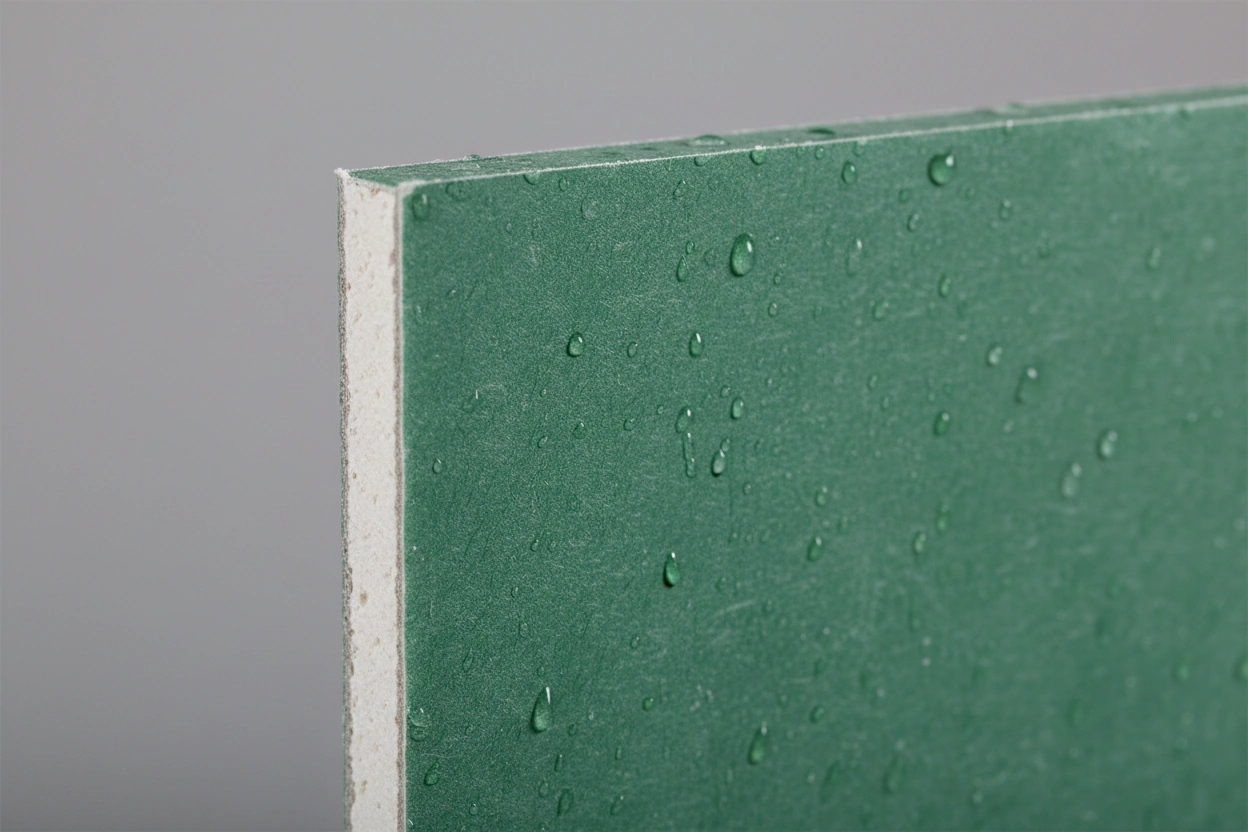
Standard drywall is gypsum sandwiched between two layers of paper. Expose that paper to sustained humidity and it weakens, warps and feeds mold. Moisture-resistant drywall solves this by replacing or treating the facing material — either with a water-repellent paper coating (green board), a wax-treated gypsum core (purple board) or a fiberglass mat facing that eliminates paper entirely (paperless board).
The key thing to understand: moisture-resistant drywall is not waterproof. It tolerates humidity, steam and the occasional splash far better than standard board — but direct, sustained water contact will still cause failure over time. For genuinely wet areas like shower surrounds, you need cement board or tile backer.
In commercial buildings, moisture-resistant drywall acts as your buffer. It buys the wall assembly time when conditions get humid — which, in a busy kitchen or locker room, is basically all day. That buffer is what prevents a $200 sheet of drywall from turning into a $5,000 remediation job.
Green Board vs Purple Board vs Paperless — What’s the Difference?
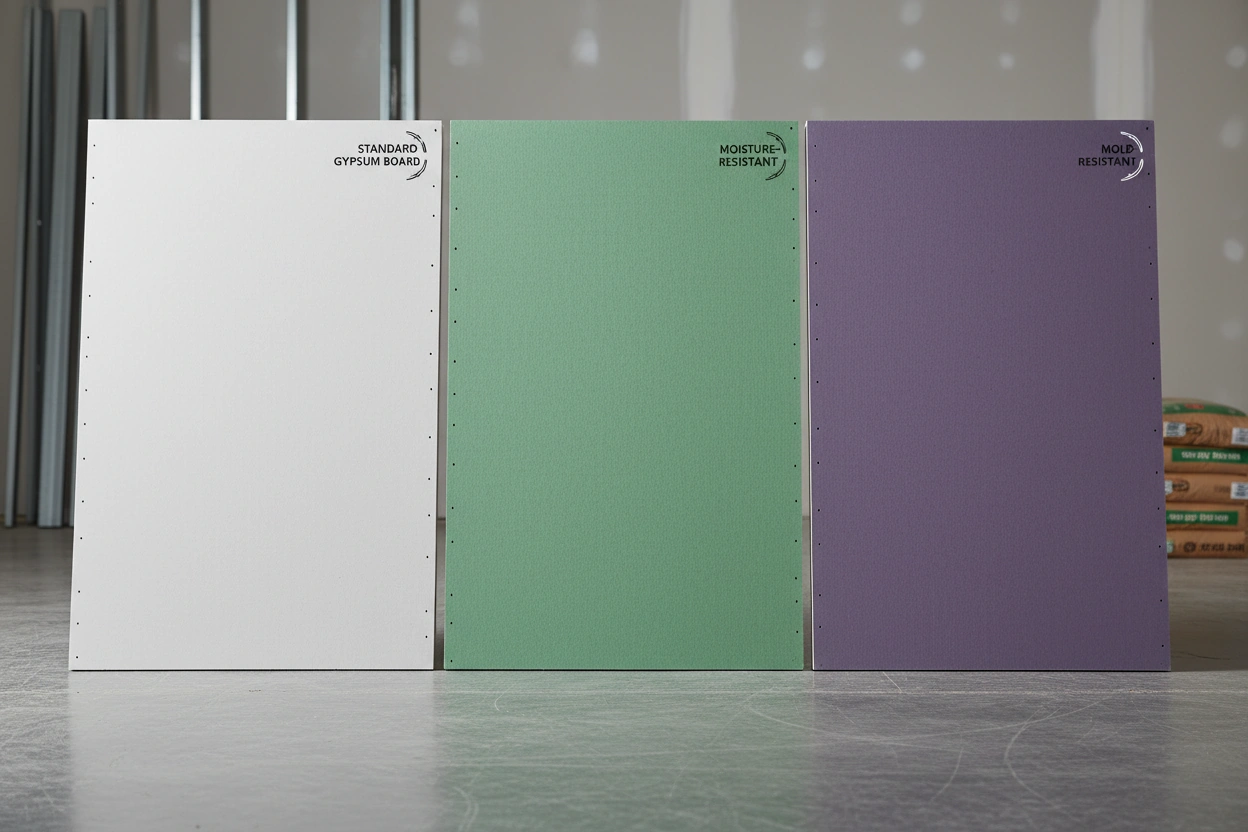
Not all moisture-resistant drywall is the same — drywall comes in different types, each colour-coded for a different level of moisture exposure. Here’s how they break down.
Green board is the classic option. It has a water-resistant paper facing and works well in areas with intermittent humidity — think office washrooms, break rooms and utility spaces. It costs roughly 15–25% more than standard drywall and installs identically. Most residential-grade moisture protection stops here.
Purple board (a brand designation that’s become a generic term) adds mold inhibitors to the gypsum core itself, not just the facing. It performs better in commercial kitchens, medical facilities and any space where cleaning chemicals are regularly applied. If your facility is mopped daily or walls get wiped with disinfectant, purple board is the smarter call.
Paperless drywall uses a fiberglass mat instead of paper on both sides. It’s the most moisture-tolerant of the three and handles humid environments that would eventually compromise the other options. The trade-off: finishing is trickier because the texture resists standard joint compound — you need fiberglass tape and more fasteners. It’s also the most expensive. For laboratories, industrial kitchens and high-humidity mechanical rooms, that cost is usually worth it.
Why Commercial Buildings Have Higher Moisture Risks Than Homes
A residential bathroom gets steamy once or twice a day. A commercial kitchen runs at full humidity for 10, 12, sometimes 16 hours straight. That’s not a small difference — it’s a completely different exposure profile. Standard drywall that would last 20 years in a home bathroom might show signs of failure in under two years in a commercial setting.
Occupancy loads are a big part of this. A restaurant restroom used by 200 people on a Saturday night generates far more moisture cycling than a family bathroom. The walls don’t get a chance to dry out between uses. Humidity stays elevated, condensation forms and the paper facing on standard drywall slowly breaks down.
There’s also the cleaning factor. Commercial facilities are sanitized with chemical cleaners, hot water and sometimes pressure washing. These processes introduce moisture that a painted drywall surface isn’t built to handle. Over time, the paint fails first, then the paper, then the core.
Building codes reflect this reality — which is why moisture-resistant materials are mandated in specific commercial zones, not left as an option. We’ll cover those zones next.
Where Building Code Requires Moisture-Resistant Drywall
Ontario’s Building Code and ASHRAE 62.1 set minimum requirements for moisture control in commercial spaces. These aren’t suggestions — they’re conditions of occupancy. Using standard drywall in a mandated zone can mean a failed inspection, a change order mid-project or a liability issue down the line if mold develops. Here’s where the rules apply.
Restrooms and Locker Rooms
Commercial restrooms are the most obvious mandatory zone. Any wall within 600mm (roughly 2 feet) of a sink, toilet or urinal must use moisture-resistant board in most Ontario commercial applications. The ceiling is often included as well, particularly in high-traffic facilities.
Locker rooms carry a heavier moisture load than restrooms because of the combination of steam, condensation and wet clothing. In schools, gyms and rec centres we work in across the GTA, the specification almost always calls for moisture-resistant board throughout the entire locker room — not just the wet zones.
One thing we see go wrong: standard drywall used on the ceiling directly above a shower area, because the installer assumed only the walls needed upgrading. Ceiling tiles in these areas absorb steam from below. Use moisture-resistant board on ceilings in any steam-generating space, not just the walls.
Commercial Kitchens and Break Rooms
Behind the stove, behind the dishwasher station, around the prep sinks — these areas need moisture-resistant drywall at minimum, and in many cases they’re better served by FRP panels installed over a moisture-resistant backer. The wall surface needs to be cleanable as well as moisture-tolerant.
Break rooms are often underspecified. Because they look like offices, contractors sometimes use standard board. But a break room with a sink, microwave and coffee station generates meaningful humidity on a daily basis. Purple board throughout the break room costs maybe $300–$400 more on a typical commercial job. A mold remediation job costs $8,000–$15,000.
Health Canada and Toronto Public Health inspections include wall surface condition as part of food safety assessments. Failing that check means the restaurant doesn’t open on schedule. We’ve seen that happen. It’s an avoidable problem.
Mechanical and Utility Rooms
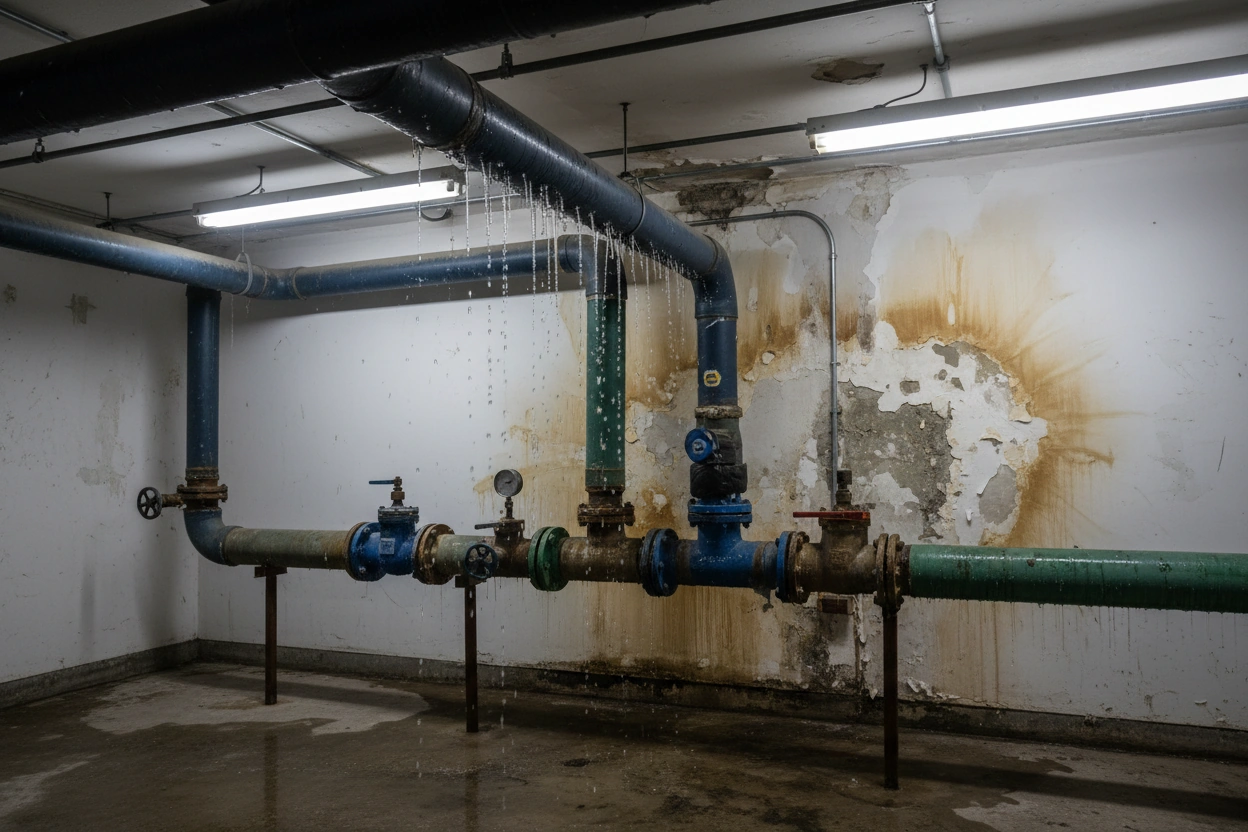
HVAC rooms, plumbing chases, boiler rooms and electrical utility spaces are consistently overlooked. These areas cycle through temperature and humidity changes constantly — warm in summer, cold in winter, always slightly damp from pipe condensation. Standard drywall deteriorates slowly but steadily in these conditions.
The issue isn’t always visible until you open the wall for a repair and find the paper completely delaminated from the core. At that point, the whole assembly needs to come out. Using moisture-resistant board from the start adds roughly $1–$1.50 per square foot to the original spec and eliminates that risk.
For mechanical rooms with exposed pipes that sweat, we often recommend paperless board — the higher upfront cost is offset by the fact that you won’t be back in that wall for the life of the building.
Stairwells and Basements
Stairwells in commercial buildings are more exposed to temperature differentials than most people realize. In winter, cold outdoor air infiltrates through doors and stairwell shafts, creating condensation on interior surfaces. Standard drywall in these areas develops surface mold within a few years — especially in the lower sections near grade.
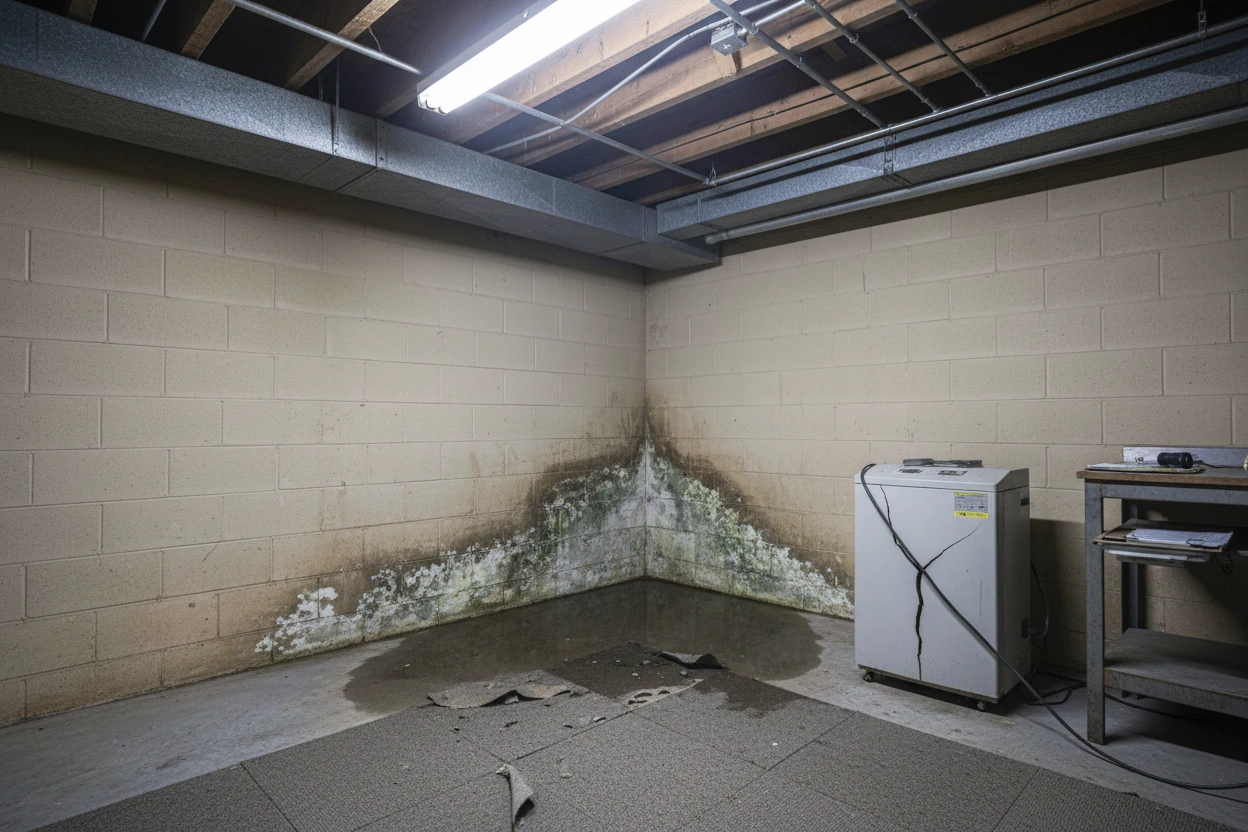
Basement commercial spaces sit close to the water table and soil, both of which off-gas humidity into the air. Even with good waterproofing on the exterior, the vapor drive through a basement wall keeps relative humidity elevated year-round. Any finished space below grade in the GTA should use moisture-resistant board as the default, not the exception.
The good news: building code in Ontario typically mandates this for occupied below-grade spaces. The bad news: we still find standard board in basements regularly during renovation work. Someone, somewhere, cut a corner.
Healthcare and Laboratory Spaces
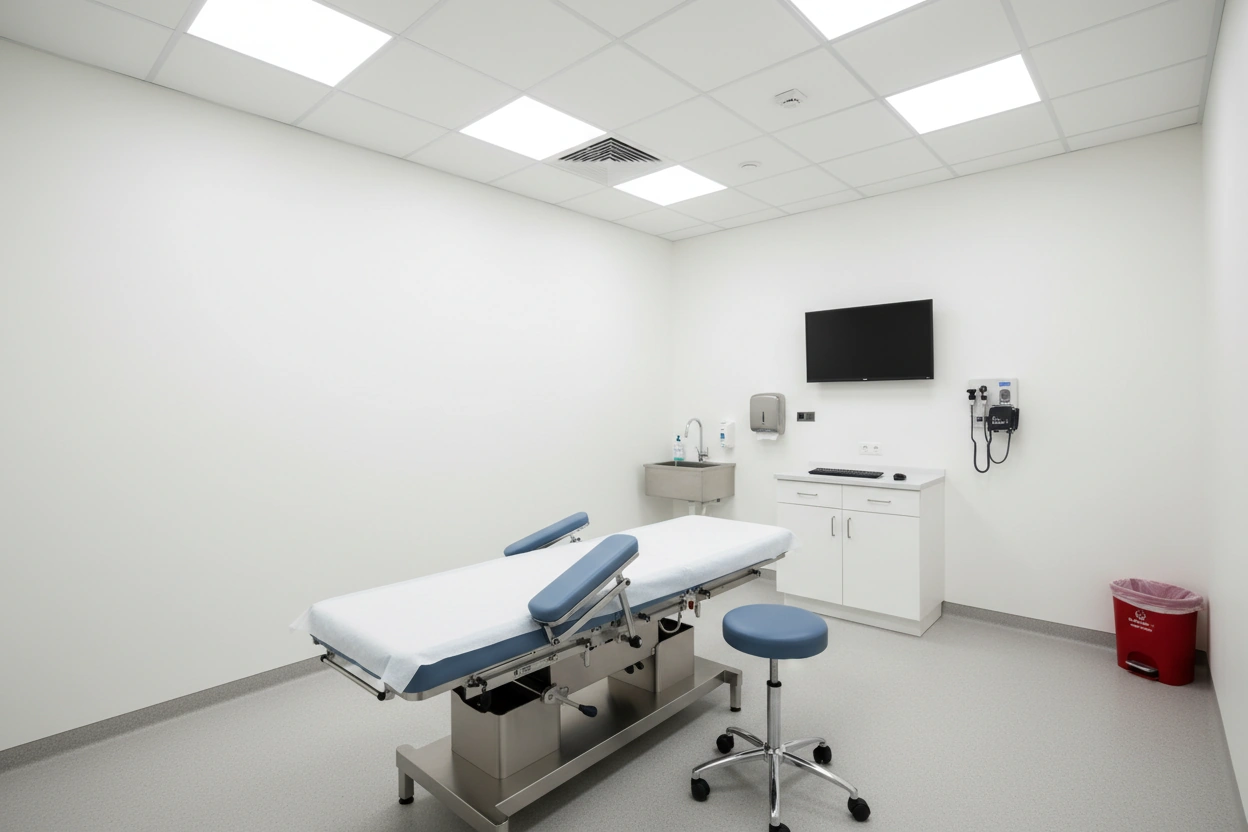
Medical clinics, dental offices, imaging suites and labs carry strict requirements from the Ontario Ministry of Health and the Canadian Standards Association. Wall assemblies in these spaces need to resist moisture from cleaning protocols, support surface disinfection and contribute to infection control — not undermine it.
Mold in a medical facility isn’t just a property problem. It’s a patient safety issue. Purple board with an antimicrobial additive is the typical specification for exam rooms, procedure areas and any space adjacent to sterilization equipment. Some laboratory specs go further and require coated paperless board that can withstand repeated chemical cleaning.
We work directly with architects and project managers on healthcare builds to ensure the wall spec matches the facility’s actual cleaning protocol. What works for a low-traffic GP clinic is different from what an oral surgery suite needs. That distinction matters.
Where Moisture-Resistant Drywall Is Strongly Recommended (Even If Not Mandated)
Building code sets the floor, not the ceiling. There are plenty of commercial spaces where moisture-resistant board isn’t legally required but makes obvious practical sense. Office server rooms and IT closets generate heat that drives condensation. Hotel corridors adjacent to pool areas deal with persistent humidity migration. Retail spaces with back-of-house mop sinks and cleaning stations qualify as well.
The test we use: if a space gets mopped, steamed or washed more than twice a week, it should have moisture-resistant board. If it’s within 10 feet of any water source and lacks good mechanical ventilation, moisture-resistant board is the safer call. These aren’t arbitrary rules — they’re patterns we’ve seen play out on real jobs.
Think of it the same way you’d think about putting a raincoat on before a walk in uncertain weather. You’re not certain it will rain. But the cost of the raincoat is nothing compared to getting soaked. Moisture-resistant board is the raincoat.
The upgrade cost on a typical commercial project is rarely more than 3–5% of the total drywall budget. On a $40,000 drywall scope, that’s $1,200–$2,000 to eliminate an entire category of callback and remediation risk. Most clients who understand that math make the right call immediately.
What Happens When You Use Standard Drywall in the Wrong Place?
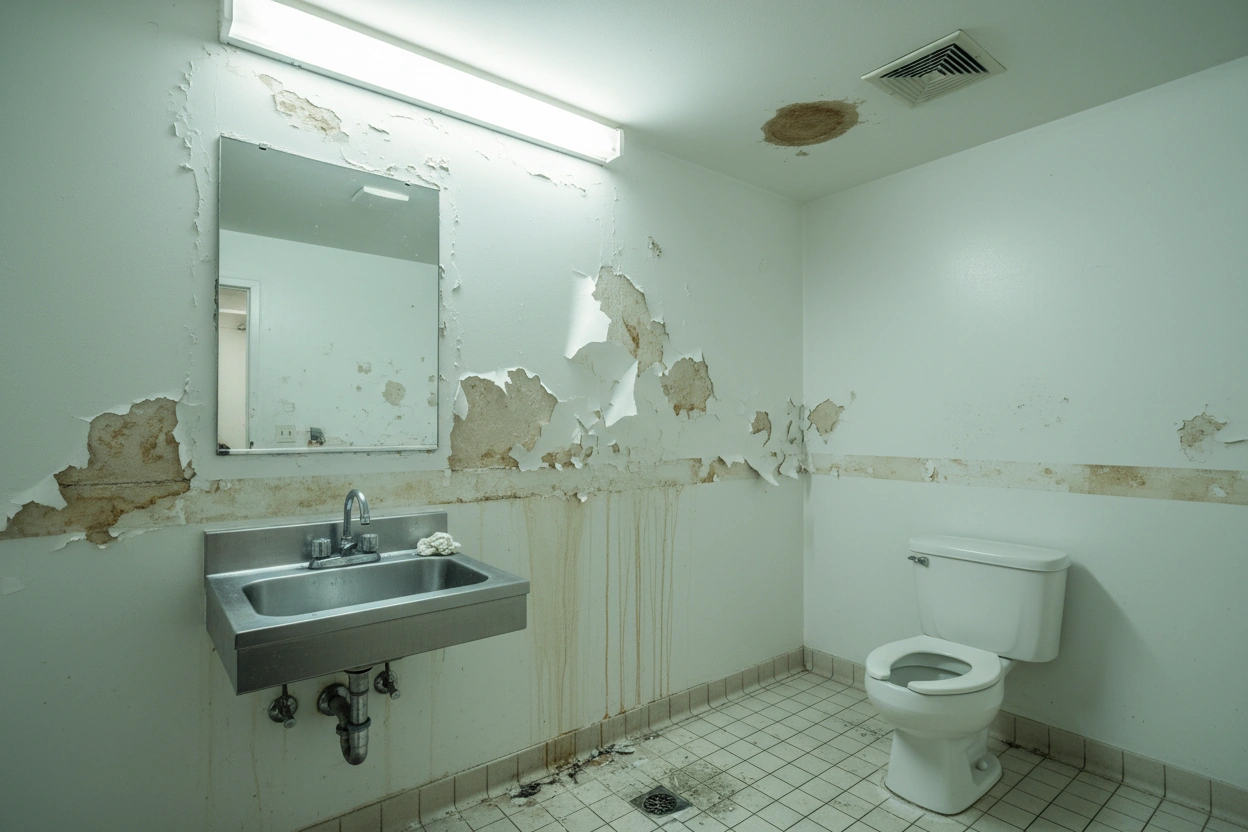
It doesn’t fail all at once. That’s the problem. Standard drywall in a moisture-prone commercial space deteriorates slowly — the paper facing separates first, then the core softens, then the surface starts to bubble and discolor. By the time the problem is visible, the damage runs deeper than the surface.
Mold follows moisture. Stachybotrys (black mold) can establish in gypsum within 24–48 hours of saturation. In a commercial kitchen or locker room, repeated exposure to steam provides exactly the conditions it needs. Remediation costs for a 200 sq ft wall assembly in a commercial facility typically run $6,000–$15,000 depending on how far the contamination has spread — and that’s before you rebuild the wall.
There’s also a liability dimension. If a tenant develops health issues linked to mold and the original spec shows standard drywall was used in a code-mandated zone, that’s a documentation problem for the building owner.
The fix is always more expensive than the prevention. We’ve never seen an exception to that rule.
How Express Drywall Services Installs Moisture-Resistant Drywall in the GTA
We’ve been doing commercial drywall in Toronto, Mississauga, Vaughan, Markham and surrounding communities for over 20 years. Moisture-resistant installation is part of nearly every commercial project we take on — it’s not a specialty add-on, it’s standard practice.
Our process starts with a site assessment. Before we quote a commercial job, we walk the space and identify every zone that needs upgraded board — not just the ones the client flagged. We check mechanical room layouts, plumbing adjacencies and basement conditions. We’ve caught dozens of underspecified areas that would have become callbacks without that step.
On the installation side, moisture-resistant board requires a few specific techniques: more fasteners per sheet (the panels are denser), fiberglass tape on paperless installations, and careful attention to penetrations and terminations where moisture can sneak in around edges. We don’t skip those steps to save time. They’re the difference between a wall that holds for 20 years and one that starts showing problems in 24 months.
Every job we do comes with a full warranty on workmanship. If we installed it and it fails for reasons within our control, we come back and fix it. That’s not a marketing line — it’s how we’ve built a 20-year business in a market where referrals are everything.
Get a Free Quote for Your Commercial Project in Toronto
Whether you’re building out a new restaurant, renovating a medical clinic or finishing a commercial basement in the GTA, we’ll tell you exactly which zones need moisture-resistant drywall, which product is right for each area and what the full scope will cost — within 48 hours.
We work directly with property owners and project managers. No middlemen, no guesswork. You get a clear spec and a price you can actually plan around.
Contact Express Drywall Services to schedule a site visit or call us to talk through your project. If your job is in Toronto, North York, Etobicoke, Mississauga, Vaughan, Richmond Hill or Markham, we can be on site fast.
Don’t wait until the wall tells you something went wrong. Get the spec right the first time.