 (416) 250-6856
 Mon-Fri: 8AM - 4PM

FRP Panels vs. Moisture-Resistant Drywall – Which One Does Your Commercial Space Need?
Both products solve a moisture problem. That’s where the similarity ends.
FRP panels and moisture-resistant drywall get specified in overlapping environments – commercial kitchens, washrooms, healthcare facilities, food service spaces – and contractors sometimes treat them as interchangeable. They’re not. One is a wall finish system designed for wet, high-traffic, cleanability-critical environments. The other is a substrate that handles incidental moisture better than standard gypsum board.
Choosing the wrong one doesn’t just create a maintenance problem down the road. In some environments, it creates a code problem immediately. We install both systems on commercial projects across the GTA – here’s how to tell which one your space actually needs.
What Is FRP?
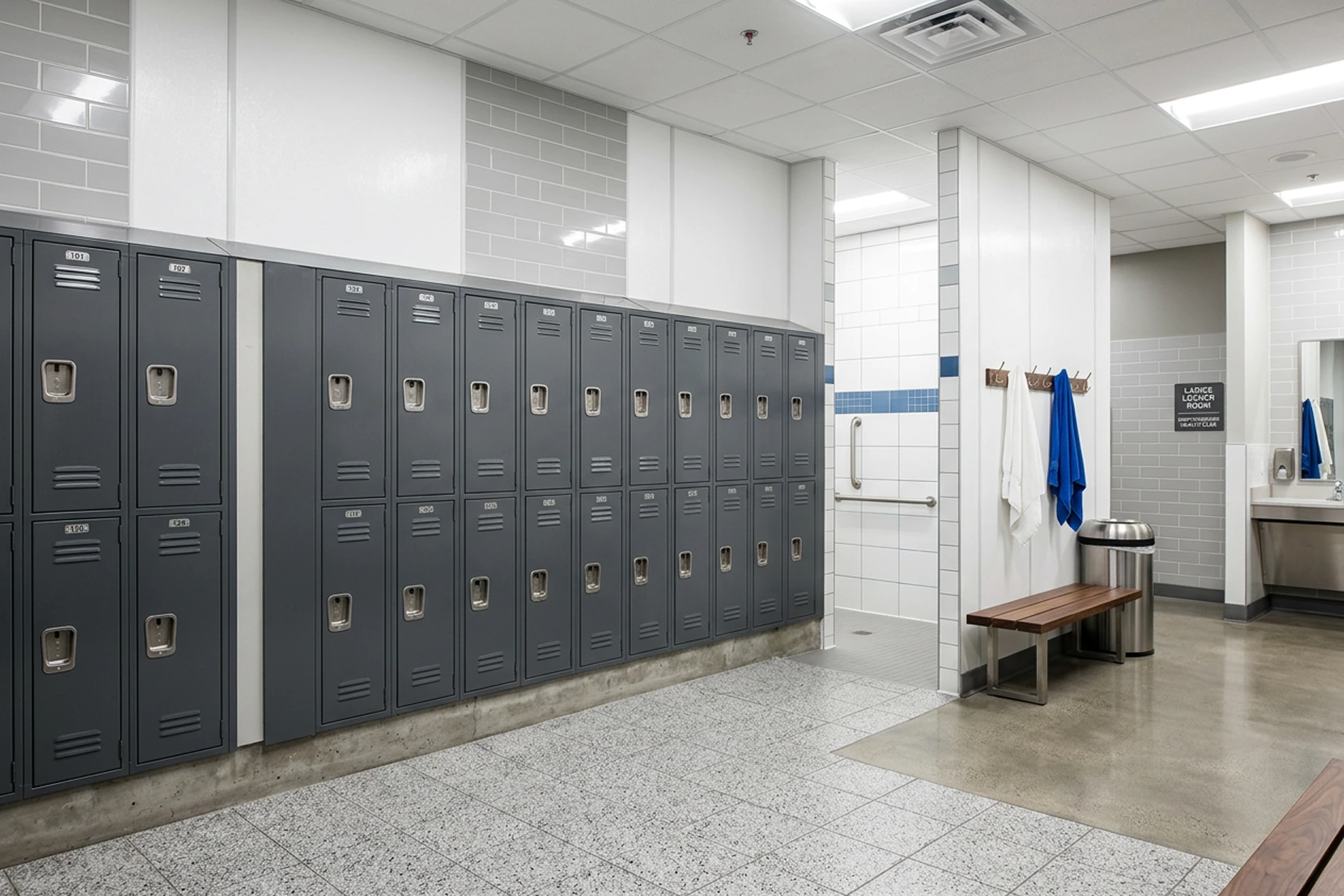
FRP stands for fiberglass reinforced plastic. FRP panels are rigid, fibreglass-reinforced polymer sheets – typically 1/8″ thick – installed over a substrate using adhesive, mechanical fasteners, or both. The surface is smooth or lightly textured, non-porous, and completely impermeable to water, which makes it the go-to finish in environments where cleanability and moisture resistance are non-negotiable.
The key properties: FRP doesn’t absorb water. At all. It can be hit with a pressure washer, scrubbed with industrial cleaners, and subjected to standing steam without degrading. It’s also impact-resistant – relevant in environments where carts, equipment, and foot traffic regularly contact the walls.
One thing worth clarifying upfront: FRP is a finish product. It gets installed over a substrate – usually moisture-resistant drywall or cement board – not as a standalone wall assembly. The substrate still matters, and we’ll come back to that.
What Is Moisture-Resistant Drywall?
Moisture-resistant drywall – commonly called green board, though that name undersells what it is and oversells what it isn’t – is a gypsum board product with a water-resistant facing and a moisture-resistant core additive. It handles incidental moisture better than standard drywall: humidity, the occasional splash, condensation from pipes running through an adjacent wall.
It does not handle sustained wetting. It is not waterproof. Leave it in a genuinely wet environment long enough – a commercial kitchen wall behind a prep sink, a washroom wall with regular splash exposure – and the gypsum core will degrade. Mold can establish behind the facing before anyone notices a problem on the surface.
There’s also cement board – a fibre-cement product with no gypsum core – which takes moisture-resistance further and is the correct substrate behind tile in high-wet-exposure areas. It’s in its own category, but understanding where it fits helps clarify when moisture-resistant drywall is enough and when it isn’t.
Where Each Product Belongs
This is the practical question. The answer depends on the environment – specifically, the level and type of moisture exposure the wall surface will see over its service life. The dividing line is direct, sustained water contact: humidity and incidental splash on one side, direct water, steam, and cleaning chemical exposure on the other.
Getting this wrong in the direction of under-specifying – putting moisture-resistant drywall where FRP belongs – creates a wall assembly that looks fine at handover and fails within two to five years. That’s a warranty claim, a tenant dispute, and a redo that costs more than doing it right the first time would have.
Here’s how we think about it when scoping a commercial project.
Environments That Require FRP
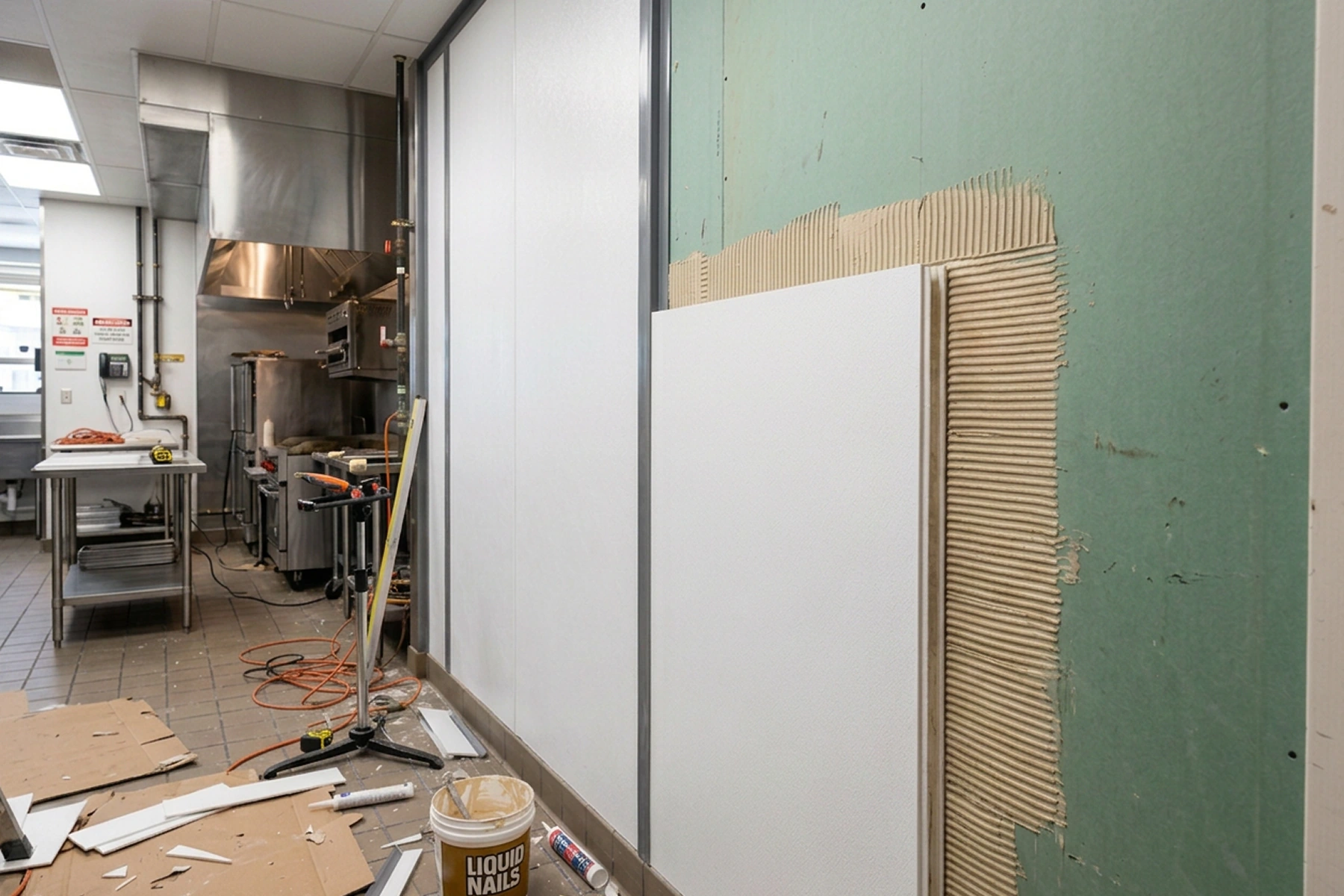
Commercial kitchens. Behind cooking equipment, prep tables, dishwashing stations, and anywhere steam, grease, and water contact the wall surface regularly. Health regulations in Ontario require washable, non-absorbent wall surfaces in food preparation and food service areas. FRP meets that requirement. Painted moisture-resistant drywall doesn’t.
Food processing and food service back-of-house. In regulated food processing environments, the wall surface is part of the sanitation protocol – it has to be cleanable to a defined standard, not just wipeable. FRP with sealed joints is the standard solution here.
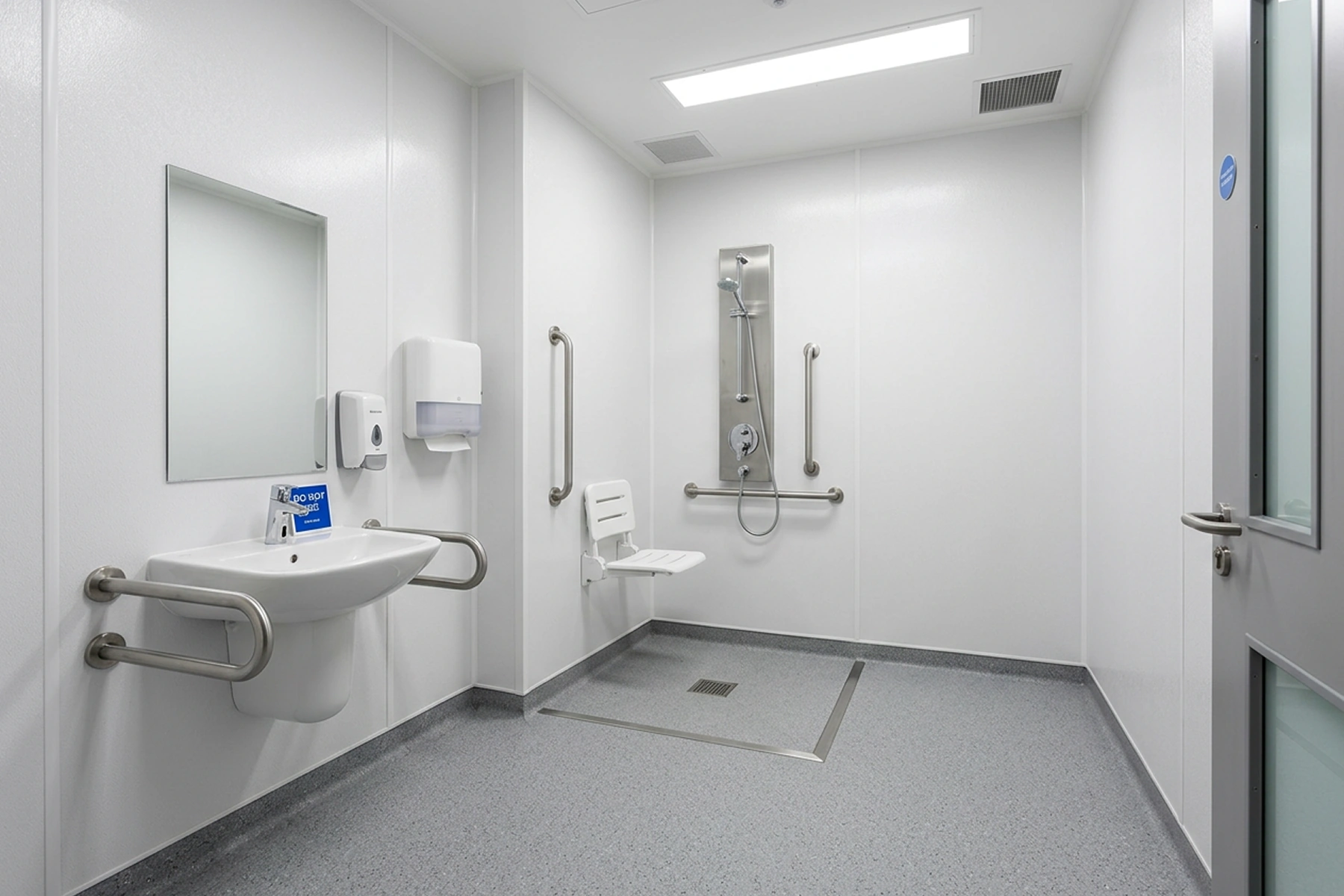
Healthcare wet areas. Soiled utility rooms, clean utility rooms, certain washroom configurations in hospitals and long-term care facilities. Infection control requirements drive the spec. Impermeable, cleanable surfaces are required. FRP qualifies; standard moisture-resistant drywall doesn’t.
Car washes, pool surrounds, aquatic facilities and mechanical rooms with regular wash-down. High humidity, regular water contact, or deliberate hosing – any of these points to FRP or tile over cement board. Moisture-resistant drywall won’t survive long-term in these environments.
Environments Where Moisture-Resistant Drywall Is Appropriate
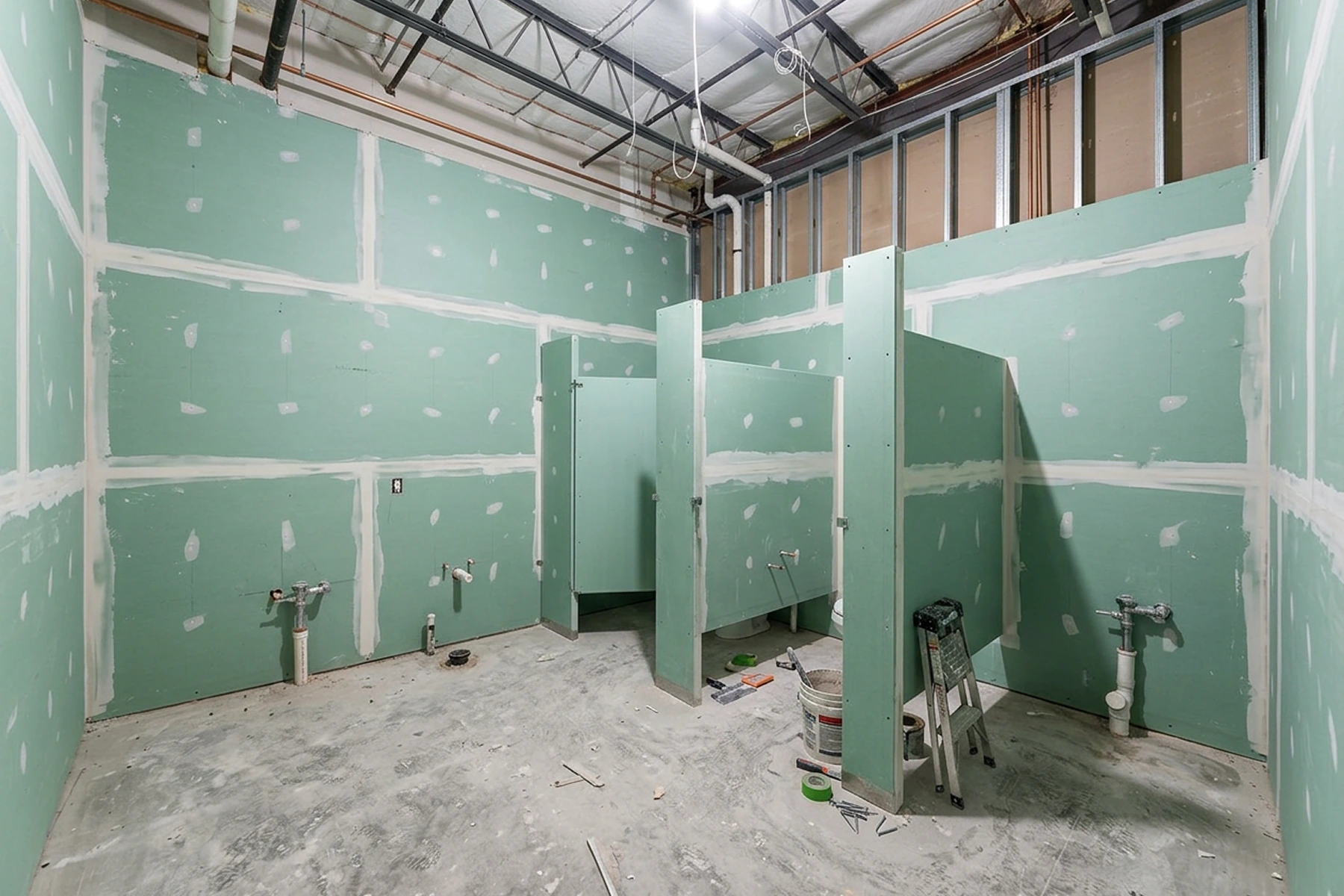
Commercial washrooms in standard office or retail buildings. Where the walls don’t receive direct water spray and humidity is the primary concern, moisture-resistant drywall with a painted finish handles this well. If tile is going on the wall, moisture-resistant board or cement board is the correct substrate.
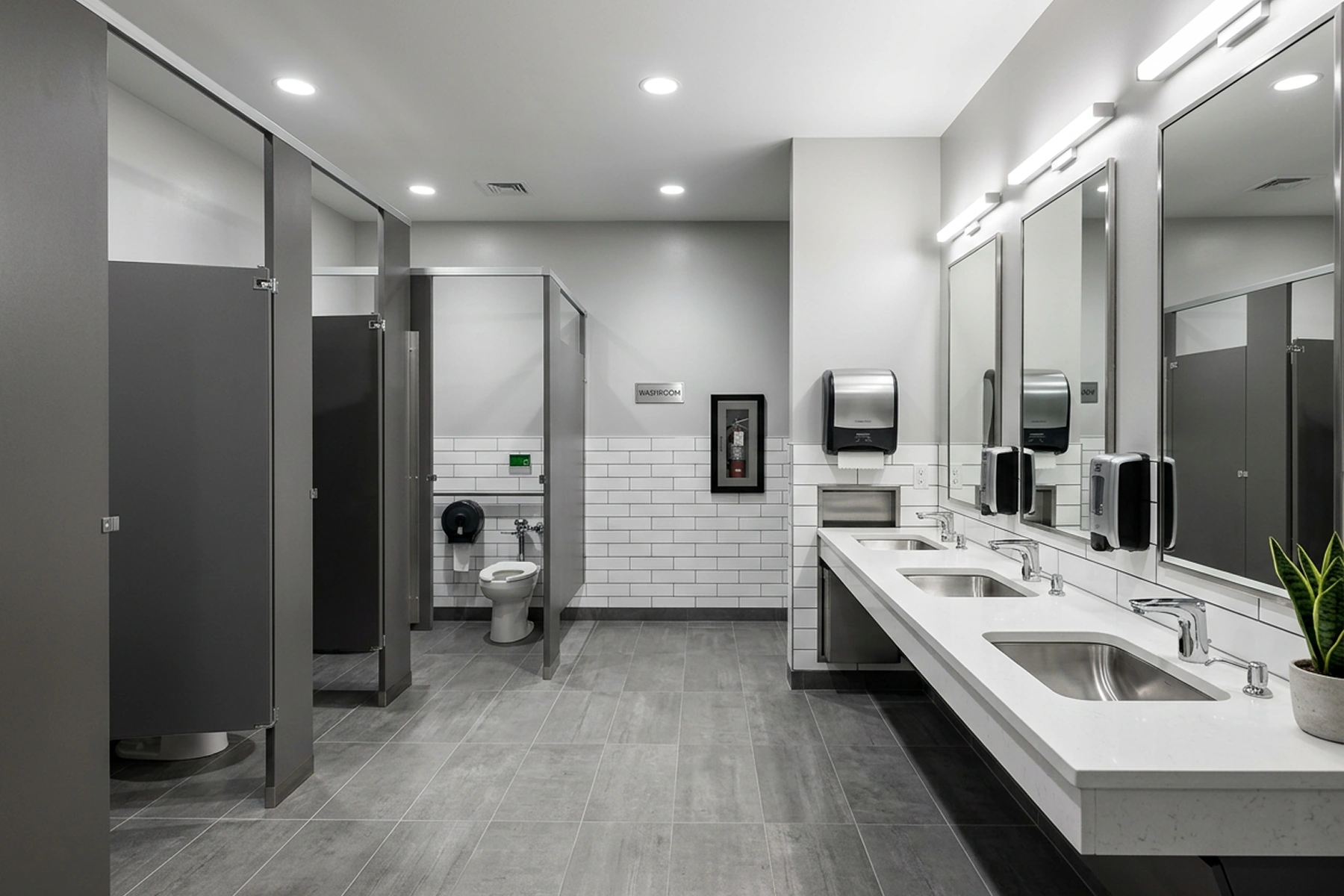
Locker rooms and change rooms. Elevated humidity, limited direct water contact on walls away from the shower zone. Moisture-resistant drywall in the dry areas; FRP or tile-over-cement board in the shower zone itself.
Mechanical and electrical rooms without wash-down, and below-grade commercial spaces where moisture migration and humidity are the concern rather than direct water contact. These are appropriate applications for moisture-resistant drywall – cost-effective, code-compliant, and durable for the exposure level.
A Side-by-Side Comparison
The table below lays out the key differences across the factors that matter most for commercial specification. Use it as a quick reference when the space type is clear but the product choice isn’t.
Keep in mind that cost comparison is relative to the environment – in a space that requires FRP, the lower cost of moisture-resistant drywall is irrelevant if it fails inspection or degrades within a few years. The right product for the application is always the more economical choice in the long run.
For spaces that fall in the middle – elevated humidity but no direct water contact – moisture-resistant drywall is typically the right call, and a conversation with the health authority or building official can confirm it before materials are ordered.
| Factor | FRP Panels | Moisture-Resistant Drywall |
| Water resistance | Fully impermeable – no absorption | Handles incidental moisture, not sustained wetting |
| Cleanability | Scrubbable with industrial cleaners | Paintable; limited cleanability |
| Impact resistance | High – resists carts and equipment contact | Standard – dents like regular drywall |
| Health code compliance | Meets Ontario food service and healthcare surface requirements | Does not meet food prep surface requirements |
| Installation | Adhesive + mechanical fasteners over substrate | Standard drywall installation |
| Joint treatment | Plastic molding + sealant – critical to performance | Standard tape and compound |
| Cost | Higher material and labour cost | Lower cost |
| Typical use | Commercial kitchens, food service, healthcare wet areas | Washrooms, mechanical rooms, humid commercial spaces |
Installation – What’s Involved
The installation process for these two products is different enough that crews experienced in one aren’t automatically proficient in the other. Standard drywall finishers can handle moisture-resistant board without additional training. FRP installation has its own sequence, its own adhesive system, and its own failure modes – and the most common failures are at the joints, not the panels themselves.
Both products require proper substrate preparation before anything goes on the wall. Surface flatness, cleanliness, and dryness all affect adhesion and long-term performance. Rushing substrate prep is one of the fastest ways to create a warranty problem.
Here’s what each installation actually involves.
FRP Installation
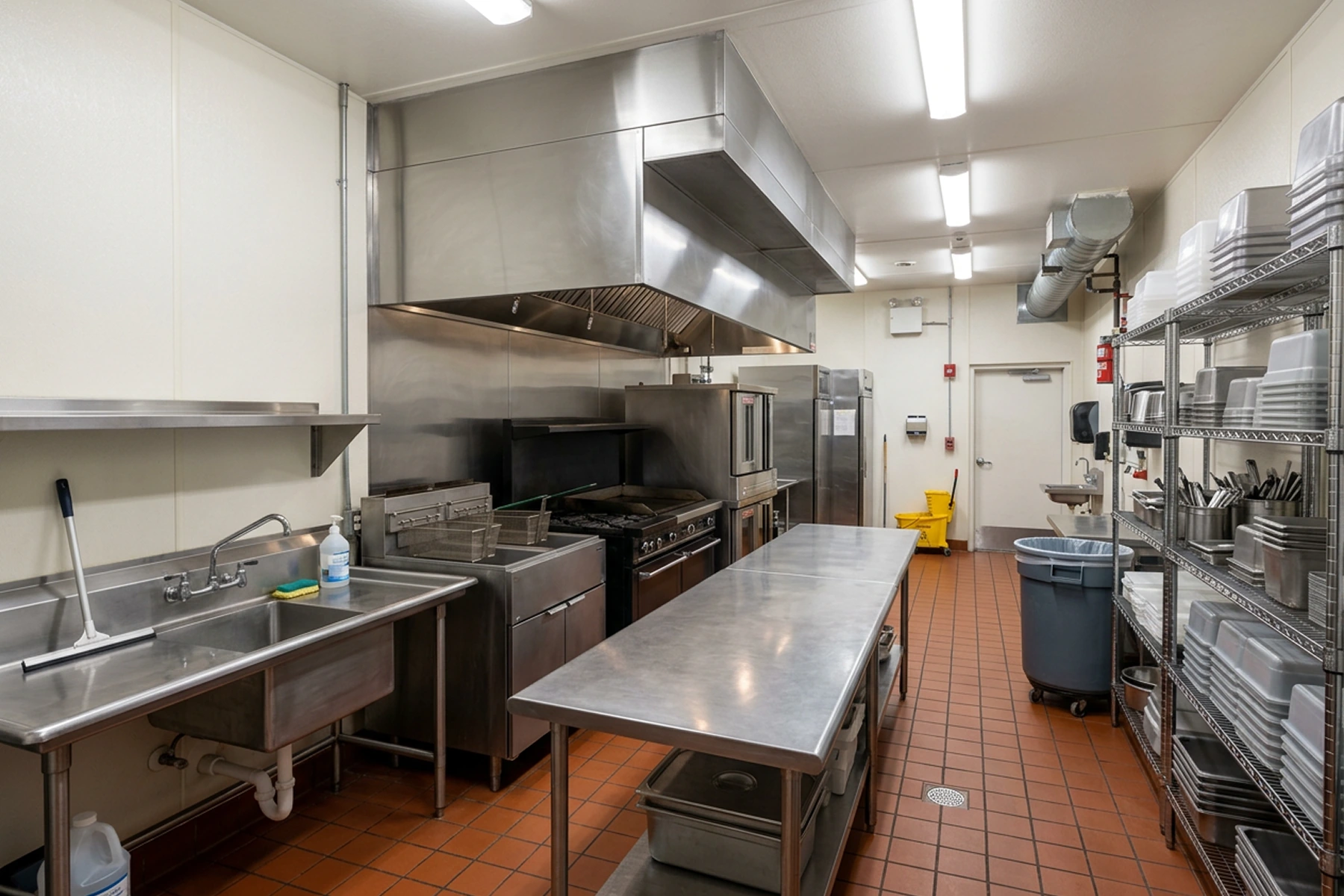
FRP panels are cut with a circular saw or scored and snapped. The substrate has to be flat, clean, and dry before adhesive goes on. Panel adhesive is applied in a pattern specified by the manufacturer, the panel is set and pressed into contact, and mechanical fasteners are driven at the perimeter and field to spec.
The joint system is where most installation problems occur. Every joint between panels, every inside and outside corner, and every termination at the floor, ceiling, and around penetrations gets a plastic trim molding – then sealed with a compatible sealant. If the sealant is missing, improperly applied, or uses the wrong product, the moisture barrier is compromised at every joint. Water gets behind the panel, the substrate degrades, and the problem is invisible until the panel starts separating from the wall.
In food service and healthcare installations, the joint system is inspected. The sealant spec and installation method are part of the health authority’s review – not just the panel itself.
Moisture-Resistant Drywall Installation
Installation follows standard drywall practice with a few modifications. The product is heavier than standard board but cuts and fastens the same way. Joints are taped and mudded in the normal sequence. In tile applications, tile is set directly over the board with the appropriate bonding mortar, and grout and tile waterproofing carry most of the water management load.
Two details that get skipped on rushed projects: moisture-resistant board should be kept off the floor to avoid wicking at the bottom edge, and fasteners should be corrosion-resistant in wet environments. These are small specifications that matter over a 20-year building life.
If the plan is to use moisture-resistant drywall as the substrate under FRP – which is the correct approach in most commercial kitchen and healthcare applications – the board installation has to be clean and flat before FRP goes on. Any voids or high spots in the substrate will telegraph through the panel face and compromise adhesion.
The Substrate Question
Because FRP is a finish product rather than a structural panel, the substrate it goes over is part of the assembly – not a separate decision. This is an area where shortcuts create problems that don’t show up immediately but are expensive when they do.
Installing FRP directly over standard drywall in a commercial kitchen is a common shortcut on tight budgets. Standard drywall behind FRP in a wet environment will eventually degrade – and when it does, the FRP loses its backing and separates from the wall. The surface looks intact until it suddenly doesn’t. Replacing it means removing the FRP, replacing the substrate, and reinstalling – which costs significantly more than specifying the correct substrate at the outset.
The correct substrate under FRP in high-moisture environments is moisture-resistant drywall at minimum, and cement board in areas with the highest water exposure. Confirm the substrate spec before ordering materials. It’s part of the assembly, not an afterthought.
What We Specify on Commercial Projects
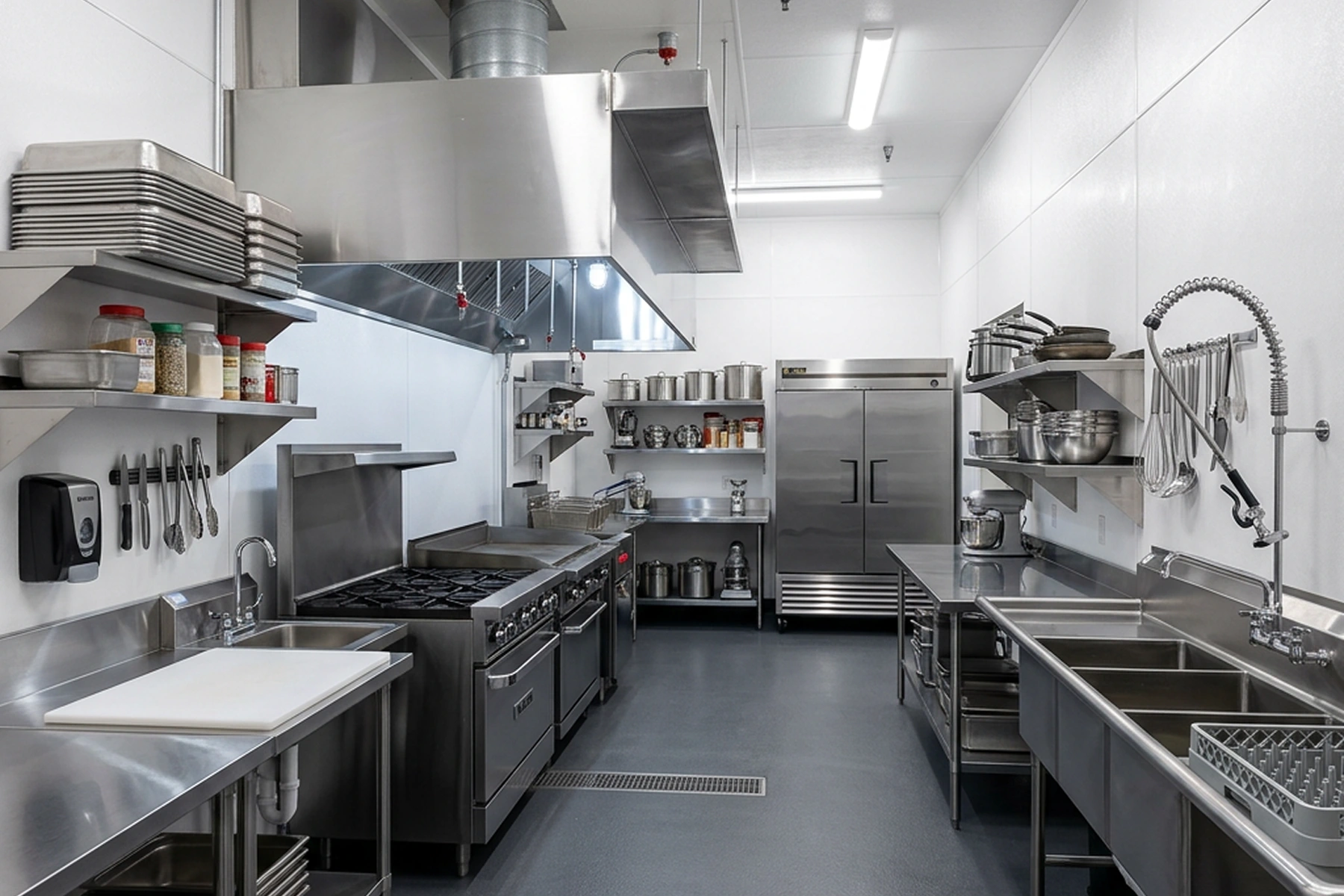
At Express Drywall Services, when a commercial kitchen, food service area, or healthcare wet room is part of the scope, we default to FRP over a moisture-resistant substrate. We work with the relevant inspection authority to confirm the surface specification before material is ordered – because getting it wrong means tearing it out, and that conversation is much easier to have at estimating than at rough-in.
For standard commercial washrooms, mechanical rooms, and elevated-humidity spaces, moisture-resistant drywall is typically the right call. It’s lower cost, faster to install, and appropriate for the exposure level. We’re not going to upsell FRP where it doesn’t belong.
We’ve installed both systems across 35+ cities in the GTA, on projects ranging from restaurant fit-outs in Mississauga to healthcare renovations in North York. With 20+ years in commercial drywall, we know where the line is – and we flag it when the spec doesn’t match the environment. All work is backed by our 1-year warranty. Free estimates on-site within 48 hours.
Get a Free Estimate
If you’re planning a commercial build or tenant improvement and aren’t sure which wall system fits your space, call Express Drywall Services at (416) 250-6856. We’ll assess the environment, confirm what the application requires, and give you a detailed, itemized quote – no hidden fees, no guesswork.
A qualified specialist will be on-site within 48 hours of contact. We serve 35+ cities across the Greater Toronto Area, from Hamilton and Burlington to Barrie and Oshawa.
Express Drywall Services. Your Trusted Drywall+ Contractor.